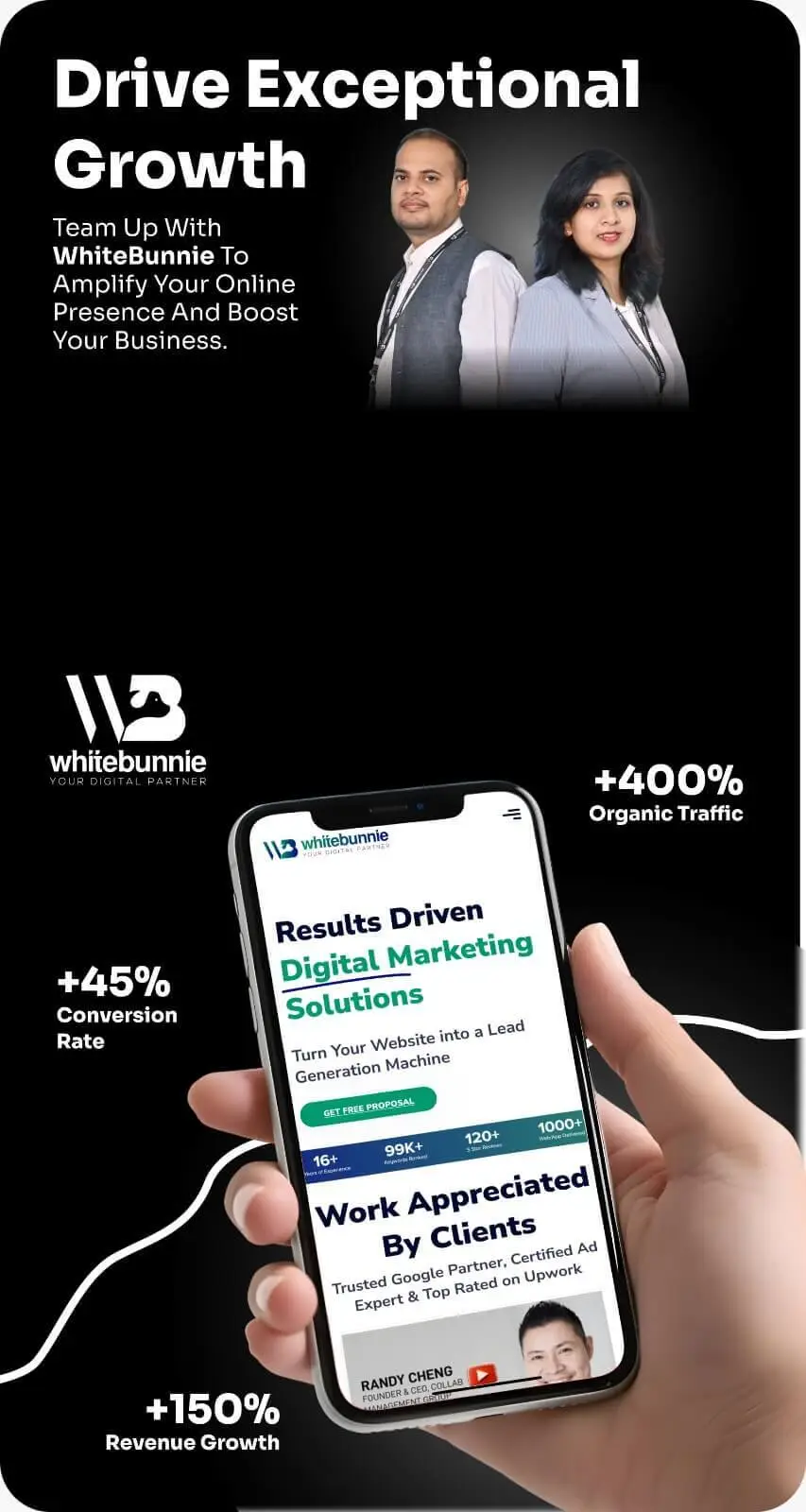


Google Maps vs Google Search vs ChatGPT for Local Discovery: Which One Wins?
-
Author
Ankit Sain -
Publish
September 24, 2026 7:26 am -
Read Time
10 Min
 Lets talk








Fill in the Form below for a no-string attached free technical discussion.
TL;DR
- Google Maps is still the strongest tool for “near me” and ready-to-visit searches. It serves more than 2 billion people a month and added Gemini-powered Ask Maps in 2026.
- Google Search now mixes the local pack, AI Overviews and AI Mode. A Whitespark study found AI Overviews on 68% of local business-type queries, while the local pack showed on 39%.
- ChatGPT is growing fast for local research. BrightLocal found 45% of US consumers used ChatGPT or similar AI tools for local recommendations in 2026, up from 6% a year earlier.
- ChatGPT is also far pickier.SOCi found it recommended just 1.2% of the locations it studied, compared with 35.9% visibility in the Google local 3-pack.
- The smart move is to cover all three. Keep your Google Business Profile strong, earn fresh reviews, and make your business facts match everywhere AI tools look.
Ask ten people how they found the last café, clinic or plumber they used. Most will give one of three answers. They searched Google. They opened Google Maps. Or, more and more often, they asked ChatGPT.
From the outside, these paths look alike. They are not. Each one reads different data, ranks businesses in its own way and serves a different step in the buying journey. If you run or market a local business, that difference decides whether you get found or get skipped.
This guide compares Google Maps, Google Search and ChatGPT for local discovery, using data as of September 2026. You will see how each one works, where each one wins, and how to show up on all three.
Google Maps is best when people want to go somewhere now. Google Search is best for comparing options and reading reviews. ChatGPT is best for detailed requests where people want a short list with reasons. Google still drives most local visits, but AI tools now shape which names people trust first.
A few years ago, local search was a one-platform game. You ranked in the Google map pack, or you lost. Today the journey is spread across several screens. The numbers show how big each channel has become:
The pattern is clear. Google remains the main road. But people now take detours through AI tools before they decide where to spend.
Google Maps is where search turns into footsteps. People open it when they already plan to go somewhere. They want directions, opening hours, photos and a phone number, and they want them fast.
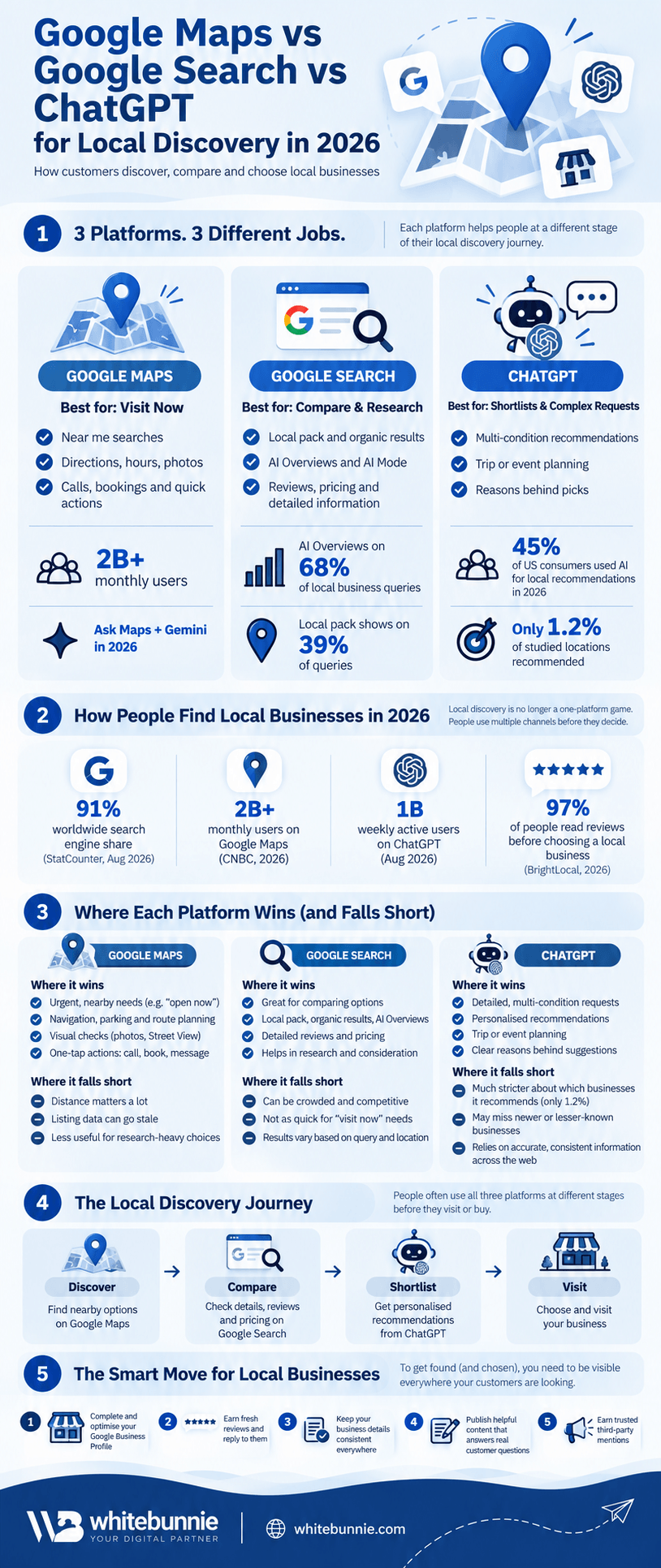
In March 2026, Google launched Ask Maps, a chat feature built on Gemini. It came first to the US and India on Android and iOS. Instead of typing “tennis court near me”, users can ask for a lit public court that is open tonight and get a direct answer. Google says the feature draws on more than 300 million places and input from more than 500 million contributors.
Google also rebuilt its driving view. Immersive Navigation uses Street View and aerial photos to show the road ahead in 3D.
If your Maps ranking needs work, our guide on how to rank in the Google local pack covers the core steps.
Google Search is where people weigh options. One results page can now hold the local 3-pack, organic links, ads, an AI Overview and a link into AI Mode. That makes it the most crowded of the three.
Whitespark studied AI Overviews in local search and found them on 68% of local business searches. The classic local pack showed on 39%. The reason is intent. Question searches, like “how much does a root canal cost in Noida”, trigger AI Overviews most. Ready-to-buy searches, like “dentist near me”, still lean toward the map pack.
AI Mode now does tasks, not just answers. A user can describe a dinner plan with party size, time and food type. AI Mode then shows restaurants with open tables and booking links. It works in the US, UK, Canada and India. In India, Google partnered with Swiggy, Zomato and EazyDiner for restaurant bookings.
For a wider look at this shift, read our breakdown of Google AI Overviews vs AI chatbots.
ChatGPT works in a different way. People describe what they need in full sentences. They might ask for a quiet café with good Wi-Fi, parking and vegan food near a metro station. ChatGPT replies with a short list and says why each one fits.
Use has jumped. BrightLocal found 45% of US consumers used ChatGPT or other AI tools to find local businesses in 2026. A year earlier, it was 6%. AI is now the third most-used source for local tips, behind Google and Facebook. And 42% of people trust AI picks as much as reviews.
ChatGPT does not read your Google Business Profile the way Maps and Gemini do. It pulls from many places instead. These include web search results (Bing is one known input), business websites, directories, review sites and local guides. A BrightLocal study of ChatGPT search sources found it also picks up Google review data when its sources show it.
This is the part most businesses miss. SOCi’s 2026 Local Visibility Index looked at nearly 350,000 locations from 2,751 brands. ChatGPT recommended just 1.2% of them. Perplexity picked 7.4% and Gemini 11%. Yet the same brands showed up in the Google local 3-pack 35.9% of the time.
Accuracy is a problem too. SOCi found ChatGPT and Perplexity got basic business facts right only about 68% of the time. Gemini, which pulls from Google Maps, got them right every time.
| Factor | Google Maps | Google Search | ChatGPT |
| Best for | Visiting now, directions, quick actions | Comparing options, reviews, pricing | Detailed, multi-condition requests |
| Main data source | Google Business Profile, user contributions | Google index, Business Profile, AI Overviews | Web search results, websites, directories, review sites |
| Businesses shown | Many, sorted by relevance and distance | 3-pack plus organic results | Usually a short list of a few names |
| 2026 AI features | Ask Maps, Immersive Navigation | AI Overviews, AI Mode bookings | Conversational answers with maps and links |
| Role of reviews | Strong ranking and trust signal | Strong trust signal | Acts like a filter; low ratings get left out |
| Detail accuracy | High when the profile is maintained | High when the profile is maintained | Mixed; about 68% in SOCi testing |
| What earns visibility | Complete profile, proximity, reviews | Profile, website content, authority | Consistent facts, reviews, third-party mentions |
Local journeys rarely stay on one platform. Here are three common patterns:
In each case, the business that wins is the one that looks consistent and trustworthy at every stop.
The good news: one set of strong foundations supports all three channels. Focus on these six steps.
Start with Google Maps and your Google Business Profile. They still carry the most ready-to-buy local searches. Next, build your place in Google Search with helpful website content. Then treat ChatGPT as a fast-growing trust layer. It rewards matching facts, strong reviews and outside mentions.
You do not need three plans. You need one business presence that is accurate, well reviewed and easy to check. Our primer on local SEO for nearby customers is a good place to begin.
No. Google Maps still leads for navigation and “near me” searches, with more than 2 billion monthly users. ChatGPT is growing as a research and shortlisting tool. Most people use both, often in the same journey.
Not directly. ChatGPT relies on web search results, business websites, directories and review sites. Your Google reviews can still show up when other pages cite them. Gemini and Google AI Mode, on the other hand, use Google Maps data directly.
Ask Maps is a Gemini feature Google launched in March 2026. It lets you ask Maps full questions about places, the way you would ask a friend, and get a direct answer. It started in the US and India on Android and iOS.
The two use different data and rules. ChatGPT names far fewer businesses. It looks for the same facts on many sites, good ratings and mentions on other websites. SOCi found ChatGPT picked only 1.2% of the locations it studied. The same brands showed in the local 3-pack 35.9% of the time.
Once a month works well. Ask ChatGPT, Gemini and Perplexity the same questions your customers ask. Note which businesses show up. Then fix any wrong details on your site and listings.
Google Maps, Google Search and ChatGPT are not rivals from your customer’s point of view. They are steps in one decision. Maps gets people to the door. Search helps them compare. ChatGPT helps them narrow a long list to a few names they trust.
The businesses that win in 2026 keep their facts right, collect reviews all year and give AI tools clear, useful content to quote. That is the approach White Bunnie follows across its local SEO services and AI SEO work. If you want to see where your business stands today, an SEO audit is a sensible first step.

Ankit Sain is an SEO specialist with over 6 years of hands-on experience in driving organic growth through data-driven and AI SEO strategies. He helps businesses improve visibility, rankings, and conversions with sustainable search solutions.

Google Search is tailored to deliver personalized results based on your location. While this is helpful for most searches, there […]
Read Post »
A healthy website maintains steady search traffic and rankings. When organic traffic or keyword positions suddenly fall, it’s time to […]
Read Post »
In 2025, being seen online is about more than Google rankings. Brands like White Bunnie now need to consider SEO, […]
Read Post »
Copyright © 2026 White Bunnie -All Rights Reserved