
How To Increase Brand Mentions in Generative AI Search Results
-
Author
Saurabh Garg -
Publish
November 12, 2025 8:53 am -
Read Time
7 Min

 Lets talk











Fill in the Form below for a no-string attached free technical discussion.
Generative answers now sit on top of search in India. Google’s AI Overviews rolled out to 200+ countries and 40+ languages in 2025, with broad availability in India. Microsoft has added a dedicated Copilot Search mode with prominent citations. ChatGPT can search the web and link out. If you want your brand to show up in those boxes, you need to publish in a way machines can trust and quote, a strategy that falls under AI SEO best practices.
If your brand isn’t showing up in these generative answers, you’re missing the highest-intent impressions on the web. At White Bunnie, we see one pattern: brands that get cited write like teachers, structure like engineers, and keep pages fresh. This guide shows how to do that for 2025–26 and how to get featured in Google AI Overview results through proper optimization.
Coverage and clarity. AI systems favor pages that answer the query cleanly and match searcher intent. Google also notes that your preview permissions affect how your content can appear in AI formats. Tight controls limit visibility.
Structure. Experiments in 2025 show strong, valid schema (not just any markup) can improve visibility inside Google AI Overviews vs. AI Chatbots, especially when your pages include structured, consistent data for Content for AI Discovery.
Citations. Copilot and ChatGPT highlight sources at the top of answers and in “show all” lists. If your page is easy to parse and trustworthy, you get the link.
What this means: Write for people, then mark it up for machines. AI systems pick clarity, structure and consistency over keyword density or link spam. That’s the foundation of AI SEO Tools and how they assist marketers in structuring content for both readers and algorithms.
Start each key page with a 2–4 sentence summary that states the answer, then add sections for detail. Use clear H2/H3 headings, bullet lists, and a short FAQ. These elements map well to AI extractors and raise your odds of being quoted.
Do this on: category explainers, pricing pages, product comparisons, and key “how to” posts.
Add FAQPage, HowTo, Product, Organization, and Article schema where it fits the visible content. Keep fields truthful and consistent with on-page copy. Tests in 2025 suggest schema quality—not just presence—matters for AI Overviews.
Set reasonable preview rules. Google warns that restrictive settings (no snippet / max-snippet set too low) can limit how your content is used in AI experiences. If you block previews, you reduce your shot at mentions.
AI systems check recency for many topics. Build a monthly refresh cycle on “money pages” and add dated, sourced updates. ChatGPT and Copilot now surface fresher sources with clear citations, so recency helps.
Original numbers travel well in AI answers. Run quick pulse polls, release local pricing benchmarks, or publish Indian compliance checklists. These get linked by media and blogs, then quoted by AI systems that prefer well-cited sources.
State your Organization details the same way across the site, LinkedIn, Crunchbase, and your Google Business Profile. Use consistent names, addresses, and category terms. This reduces ambiguity when AI attempts entity resolution.
Pitch practical guides to industry newsletters, university blogs, and standards bodies. One strong, independent citation often triggers more mentions inside AI summaries that aggregate consensus.
Short paragraphs (2–4 lines)
Descriptive headings (“Pros,” “Limitations,” “Steps,” “Cost,” “Examples”)
Clean tables for comparisons
Alt text that describes the graphic (not keyword stuffing)
These patterns appear in many pages that get cited in AI answers.
Target mid-to-broad queries where users want a compact summary.
Use schema and clear previews.
Track if your queries now show Overviews: India sees them on a notable slice of searches.
Expect more visible citations and a “show all sources” pane.
Publish comparison tables and step lists; Copilot often surfaces skimmable sources.
Create pages with named sections, sources, and clear language. ChatGPT links out when it can see reliable, recent pages.
A Pune-based SaaS brand wanted more non-brand discovery in AI answers for “warehouse slotting algorithms” and “WMS for FMCG India.” With White Bunnie, they:
Rebuilt two cornerstone pages with answer-first intros, validated FAQPage schema, and a dated update line.
Published a small India-only dataset: average picking time improvement across five pilot sites.
Kept previews open, with max-snippet at default.
Within 6 weeks, they began appearing as a cited source in Copilot for the FMCG query and were linked in ChatGPT results for related terms. Organic click-through rose as users tapped the cited link. (We saw the same URLs gain stability in Google’s AI Overviews as the pages earned more third-party links.)
Over-markup. Don’t add schema that the page doesn’t support. It can hurt trust signals.
Locked previews. If you hide snippets, you reduce inclusion in AI formats.
Thin “SEO text.” AI systems skip vague copy. Give steps, numbers, and examples.
Stale pages. If a page has not changed in a year, refresh it or merge it.
Update one “money page” with a new stat, graphic, or FAQ.
Validate schema in a tester; fix any errors.
Publish one short explainer with a table or list.
Pitch one quote or data point to a relevant newsletter or community.
Track appearance of AI Overviews and Copilot citations for 10–15 target queries in India.
You can’t force a mention in generative results. You can earn it.
Write clear answers. Mark them up well. Keep them fresh. Protect previews. Share real data.
Follow this for a quarter and your chances of being cited in AI Overviews, Copilot, and ChatGPT go up. Then keep going.

Saurabh Garg, the visionary Chief Technology Officer at Whitebunnie, is the driving force behind our cutting-edge innovations. With his profound expertise and relentless pursuit of excellence, he propels our company into the future, setting new standards in the digital realm.

LinkedIn has always been the go-to spot for networking, job searches, and sharing professional milestones. But in 2025, the platform […]
Read Post »
As we approach 2026, AI-powered SEO is transforming how businesses gain online visibility. The results speak for themselves: leading agencies […]
Read Post »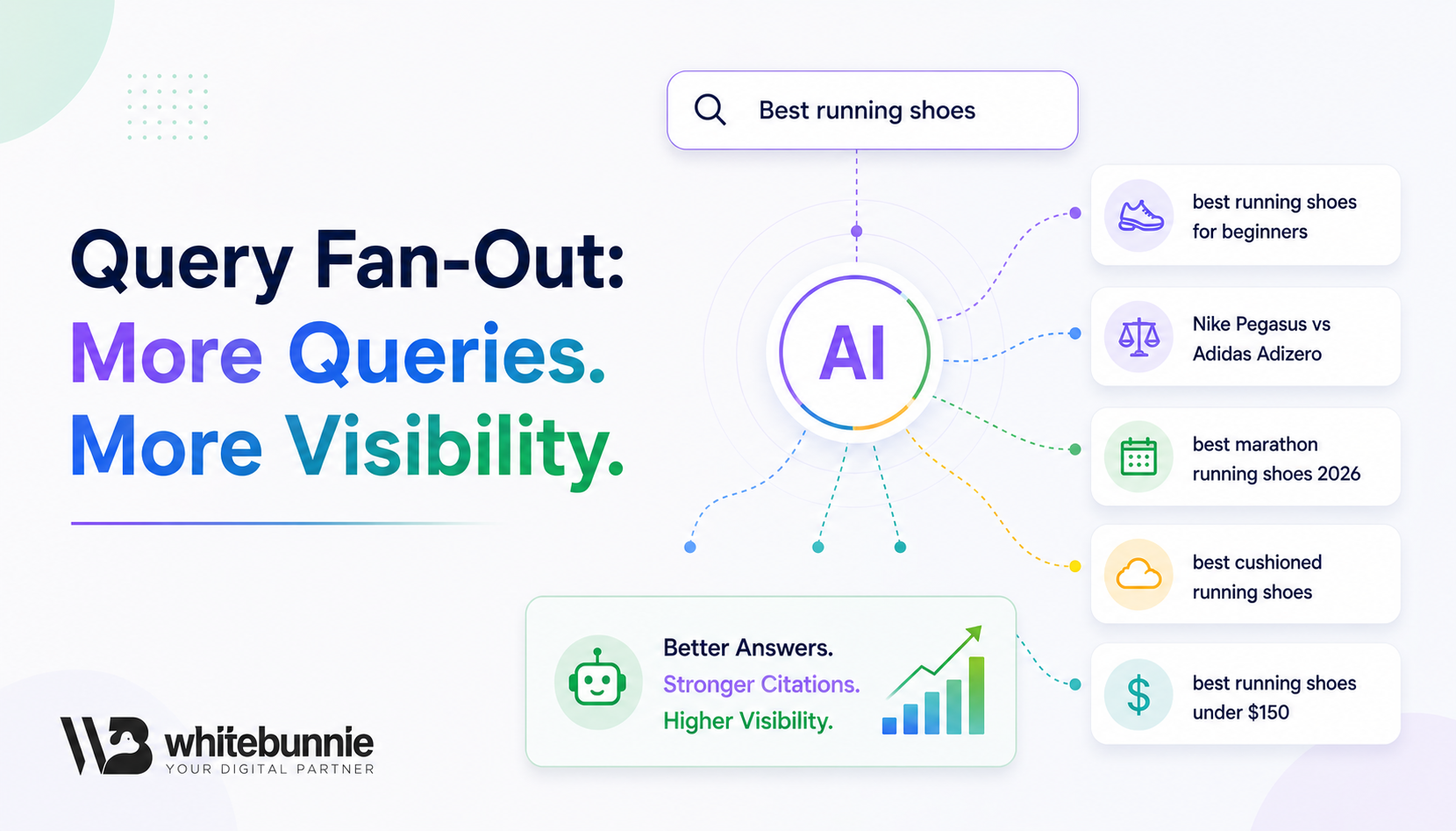
TL;DR: Query fan-out is the process by which an AI search engine turns one question into many smaller searches. It […]
Read Post »
Copyright © 2026 White Bunnie -All Rights Reserved