


Local SEO: Targeting Nearby Customers
-
Author
Saurabh Garg -
Publish
May 1, 2025 10:35 am -
Read Time
10 Min

 Lets talk











Fill in the Form below for a no-string attached free technical discussion.
In today’s digital-first world, having an online presence isn’t enough — especially for local businesses that rely on foot traffic and community engagement. That’s where Local SEO Services come in. It helps businesses show up in search results when nearby customers are looking for products or services like yours. Whether you run a coffee shop, dental clinic, or home repair service, Local SEO can drive high-intent traffic to your doorstep.
Local SEO (search engine optimization) means optimizing your online presence so that local customers can find your business. In other words, it focuses on location-specific searches. Local SEO is crucial because most people look online for nearby services or stores. In fact, 97% of search engine users have searched for a local business and 46% of all Google searches seek local information. By adding location terms (like a city or neighborhood) to keywords and improving local listings, businesses ensure they show up for “near me” or “Service in City” searches.
Local businesses benefit directly from this focused approach. Unlike broad, national SEO, local SEO hones in on customers in your area. It often involves optimizing your Google Business Profile (formerly Google My Business), building citations on local directories, and collecting customer reviews. These tactics help a nearby customer say “I’ll visit that store” when they search for local services. Because consumers prefer local options (more than half of buyers prefer to shop locally), Local SEO for Business connects companies to an audience ready to visit and buy.
Optimizing for local search dramatically boosts visibility where it counts. BrightLocal notes that local SEO activities (like building directory listings and local links) make a business more discoverable online. Higher visibility translates into more foot traffic to your store – for example, a shop optimized for “bakery Noida” will appear in maps and attract nearby customers.

Local SEO for Medical Practices, retail stores, or any local service providers taps into a “local shopping boom.” BrightLocal cites research showing that over half of consumers prefer to shop locally and support small brands. By appearing in local results, businesses claim those customer opportunities. Practical results follow: improved local ranking often means more phone calls and store visits. For instance, Google points out that a well-maintained Business Profile (with accurate address, hours, and photos) leads to more calls and visits from searchers.
Another benefit is targeted traffic and higher conversion. When people search for “Dentist in Noida” or “Delhi electrician,” they usually have a strong intent to act. Local SEO brings those high-intent users to your door or website. A Sprout Social guide explains that local SEO “boost your online visibility,” bringing more foot traffic and more targeted traffic, which improves conversion chances. In short, local SEO makes your business more competitive and trustworthy in the eyes of community customers.
| Feature | Local SEO | Traditional SEO |
| Audience | Nearby customers in your city or region | Broad, national or global audience |
| Key Focus | Google Business Profile, local keywords, citations | General keywords, content quality, backlinks |
| Search Results | Google Local Pack/Maps (map listings, top 3 box) | Organic search results on page 1 (10 blue links) |
| Ranking Signals | NAP consistency, local reviews, proximity to searcher | Site content relevance, backlinks, technical SEO |
| Examples of Queries | “Coffee shop Noida”, “best tutor near me, Delhi” | “How to boil pasta”, “best coffee machine reviews” |
This table shows that Hyperlocal SEO emphasizes geographic relevance. For example, Google’s Local Pack (the map with top local listings) highlights businesses with optimized profiles. Appearing in that map pack is often more prominent than showing up in the organic list below.
Building a strong local presence involves several elements:

Several tools can simplify local SEO management:
Here are practical steps small businesses can take right now:

Make sure every field in your Business Profile is filled: address, phone, category, and business hours. Add high-quality photos of your location and products. Keep information updated (holiday hours, promotions). A complete profile is a strong signal to Google and customers alike. Moz confirms that a well-optimized GBP is one of the top factors for ranking in the local pack.
Audit your citations on the web. Pick a single format (e.g. “Street” vs “St.”) and use it everywhere. Fix any old directories showing wrong data. Since Google and other sites scrape these listings, consistent NAP helps your business get verified and ranked. Even small citations (like a mention in a Delhi community event listing) reinforce your local presence.
Ask customers to review you on Google or local sites. For example, an auto shop in Noida could hand out a card with a QR code linking to its review form. As BrightLocal advises, make it easy by providing instructions and direct links. When reviews come in, reply promptly – thank customers or address concerns. Google notes that responding to reviews signals you care about customers. More and better reviews will move you up in local search.
Update page titles and headings to include location keywords. Instead of “Best Tutoring Services,” use “Best Tutoring Services in Noida Sector 18.” Mention nearby landmarks or neighborhoods on your site. This tells search engines your service is relevant to a specific area.
Test your site on phones. Use Google’s PageSpeed Insights or Mobile-Friendly Test (developers.google.com) to fix issues. Common fixes include compressing images, enabling browser caching, and using responsive layouts. Remember, local searches often happen on-the-go, so a mobile-smooth experience keeps those customers engaged.
Write blog posts about local events or partnerships. For example, a Delhi restaurant could blog about participating in a city food festival. Such content naturally earns local backlinks and signals relevance. Participate in community forums or social media groups to increase visibility.
If you have more than one branch (e.g. multiple salons across Delhi), create a unique landing page for each location with its own NAP and map. This helps each store rank in its neighborhood.
Use Moz Local or BrightLocal to periodically audit your listings. These tools can alert you to duplicate listings or missing information. They also track your local ranking over time, so you can measure the impact of your efforts.
For example, a local shop in Noida that fully completes its Google Business Profile – adding business hours, photos, and gathering reviews – will appear in Google Maps when nearby customers search. This direct visibility (map marker, phone number, star ratings) turns searches into foot traffic.
By consistently applying these strategies, a local business can climb higher in Google’s local results. Local SEO is an ongoing process: keep your profiles updated, collect fresh reviews, and adapt to what customers search for in your area. Over time, you’ll see more calls, visits, and sales from people in your community.

Saurabh Garg, the visionary Chief Technology Officer at Whitebunnie, is the driving force behind our cutting-edge innovations. With his profound expertise and relentless pursuit of excellence, he propels our company into the future, setting new standards in the digital realm.
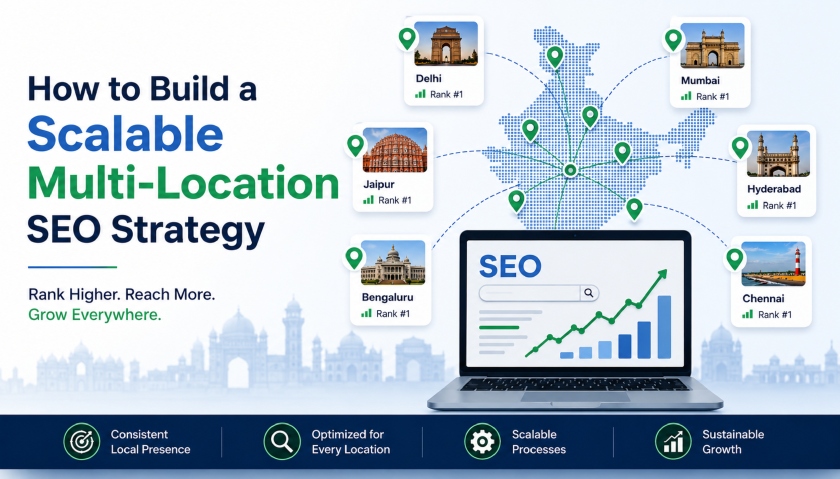
Quick Summary • Give every location its own page and its own Google Business Profile; never bundle multiple addresses into […]
Read Post »
Remember the days when finding a doctor meant asking your neighbors or flipping through the Yellow Pages? Well, times have […]
Read Post »
Has your car washing Google Business Profile (GBP) suddenly disappeared from Google searches, leaving you puzzled and frustrated? You’re not […]
Read Post »
Copyright © 2026 White Bunnie -All Rights Reserved