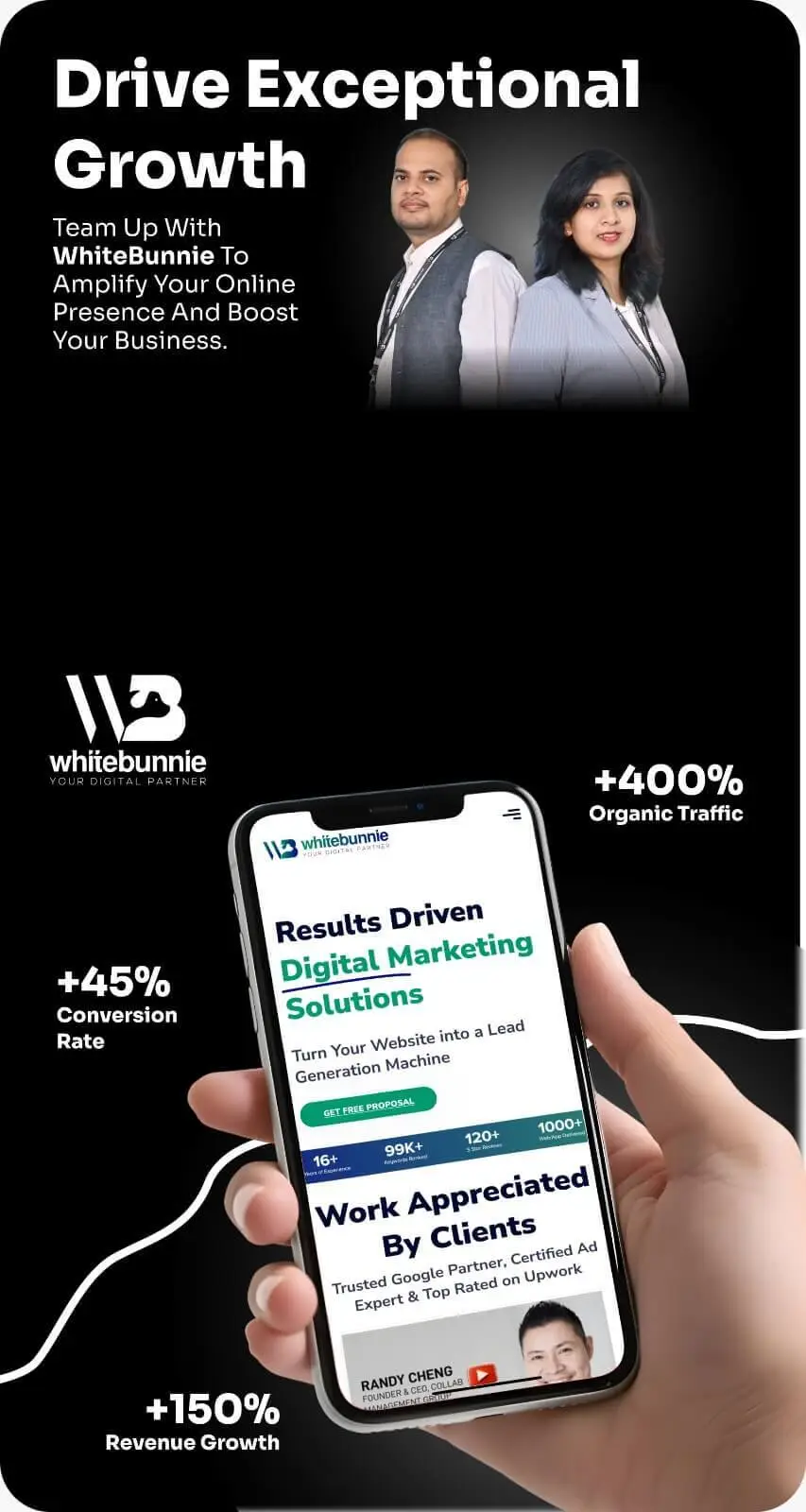


Claude SEO: How to Get Your Site Cited in Claude Answers
-
Author
Ankit Sain -
Publish
July 30, 2026 5:40 am -
Read Time
11 Min
 Lets talk








Fill in the Form below for a no-string attached free technical discussion.
Quick summary
- Claude SEO means structuring your content, technical setup, and brand credibility so Claude names and links your site in its answers.
- Claude’s web search runs mainly on Brave Search, not Google or Bing. Brave visibility helps, but keep Google and other crawlers open too.
- Anthropic uses three crawlers: ClaudeBot, Claude-User, and Claude-SearchBot. Blocking one does not block the others.
- Claude cites fewer sources than Perplexity and cross-checks facts first. Clear structure, dated facts, named authors, and third-party proof win citations.
- Track visibility with a fixed prompt set run monthly, or a GEO tool like Profound, Frase or Otterly.AI.
If you have watched Google traffic dip while more people ask ChatGPT, Gemini, and Claude for recommendations, the search game has clearly shifted. Getting named inside an AI answer is the new front page. And of the major assistants, Claude is the hardest one to earn a spot in.
That is good news. Because Claude sets a high bar, the work you do to get cited by it usually pays off across every other platform too. This guide walks through how Claude picks sources, how its crawlers work, and what you can do this quarter to show up.
Claude SEO is the practice of making your website easy for Anthropic’s Claude to find, trust, and cite when it answers a question. It is not about ranking in a list. Claude has no public directory you submit to. It reasons from sources it judges credible and quotes those that answer the question cleanly.
So the goal is simple to state and harder to do: become one of the sources Claude trusts enough to name.
This differs from classic Google SEO. Google rewards keyword relevance and links. Claude rewards verifiable proof, such as dated facts, named authors, primary data, and agreement across independent sources. If you are new to this space, our SEO vs AEO vs GEO guide explains how these layers fit together.

Claude answers in a few ways. It can reply based on what the model has already learned, run a live web search, or fetch a specific page you point it to. Each path has its own rules, which is why you cannot treat Claude like a single search box.
When Claude needs current information, its web search leans on Brave Search as the retrieval backend. TechCrunch reported this soon after Anthropic launched web search in March 2025, and Anthropic later listed Brave on its subprocessor documentation. Brave itself confirmed in early 2026 that its Search API now supplies most of the top large language models.
You will see one figure repeated everywhere: an 86.7% overlap between Claude’s citations and Brave’s top results. Treat that as a hint, not gospel. It came from a single vendor test run one day after launch, and Anthropic’s subprocessor list now names a second search provider alongside Brave. The picture is more layered than “Claude equals Brave.”
The practical takeaway holds up anyway. If your pages perform well in Brave Search, you gain a real edge with Claude. But do not switch off Google or other crawlers to chase this. Broad crawl access and strong fundamentals feed the whole system.
Claude names fewer sources per answer than Perplexity does, and it places them as clear attributions rather than a long footnote pile. A single Claude citation carries weight. It is harder to earn and worth more when you do.
Claude tends to verify a claim against other sources before repeating it. It is slow to accept a brand’s description of itself when it cannot find matching signals elsewhere. This is why independent proof does so much of the heavy lifting, a point our post on who influences AI responses covers in detail.
In February 2026, Anthropic updated its crawler documentation and made the setup clearer (see the Search Engine Land report). There are three separate bots, each with its own job and its own consequence if you block it.
| Crawler | What it does | What blocking it costs you |
| ClaudeBot | Collects public web content for model training | Your future content stays out of training data. No effect on live citations. |
| Claude-User | Fetches a page when a user asks Claude something that needs it | Claude cannot pull your pages into user-directed answers. |
| Claude-SearchBot | Indexes your content for Claude’s search results | Your pages drop out of Claude’s search-powered answers. |
Here is the trap many publishers fell into. Back in 2024, a lot of sites blocked ClaudeBot to keep their content out of AI training. That move does nothing to Claude-User or Claude-SearchBot. So teams quietly removed themselves from training while assuming they had protected search, when the real risk was the opposite: blocking a search or retrieval bot by accident and vanishing from Claude answers.
All three bots honor robots.txt, including the non-standard Crawl-delay rule. Anthropic does not publish fixed IP ranges, so checking your server logs for the exact user-agent strings is more reliable than IP blocking.
If you want Claude to cite you, the safest move is to allow all three bots. If you want to keep content out of training but stay visible in answers, split the rules like this:
User-agent: ClaudeBot
Disallow: /User-agent: Claude-User
Allow: /User-agent: Claude-SearchBot
Allow: /
Before you change anything, read your current robots.txt line by line and check your CDN or firewall for blocks that return a 403. A technical SEO review usually surfaces these access problems fast, and fixing them is often the quickest win available. Book a free SEO audit if you want a second set of eyes.
Claude’s training pushes it toward careful, factual answers. That shapes what it cites. Four things stand out.
Claude looks for specific, verifiable detail, not repeated keywords. A sentence with a number, a date, and a source beats three paragraphs of adjectives. State what your product does, who it serves, current pricing, and its limits, in plain HTML.
Claude leans harder on author trust than most assistants. A byline linked to a real person, a LinkedIn profile, or an institution beats an anonymous page. Our E-E-A-T guide shows how to build this into every page.
A line that says “a recent study found” carries less weight than one that names the study, the publisher, and the year. Link to original research, government data, or official docs when you can.
Claude tends to skip content that reads like a landing page full of superlatives. Writing that reads like honest analysis, with tradeoffs named, earns more trust. For a topic with two sides, give the fair case for each, then offer a clear view.
Great content cannot get cited if Claude cannot read it. Cover these four basics.
Claude reads at the passage level. A single well-built paragraph can earn a citation, while a strong page with messy sections gets skipped. Structure for extraction.
This is the same passage-level thinking behind strong content marketing and behind building topical authority across a cluster of related pages.
Your own site states your claim. Independent sources confirm it. Because Claude cross-checks, that outside confirmation moves the needle more than anything you say about yourself. SE Ranking’s 2025 study of roughly 129,000 domains found that referring domains were the strongest measured predictor of AI citations in its dataset, which lines up with how Claude behaves.
Three channels carry the most weight:
Claude avoids repeating stale information, since old data would undercut its accuracy. A page listing 2024 pricing in 2026 signals your site cannot be trusted, and Claude will pass. Three habits keep you current:
You cannot fix what you cannot see. These platforms keep ranking at the top of search results for AI visibility tracking, and each helps you measure whether Claude names your brand. Pricing shifts often, so confirm current plans first. Our deeper roundup of LLM tracking tools compares them in more detail.
| Tool | Best for | Notes |
| Profound | Enterprise GEO teams | Category leader; raised a large Series C in early 2026. Deep cross-engine analytics. |
| Frase | Content and SEO teams | Tracks ChatGPT, Claude, Perplexity, Gemini, and Google AI, then links findings to writing and publishing. |
| Otterly.AI | Small teams and consultants | Low entry price; named a Gartner Cool Vendor in 2025. Good starter option. |
| AthenaHQ | Growth-stage SaaS | Tracks eight engines with credit-based prompt tracking. |
| Semrush AI Toolkit | Teams already on Semrush | Adds AI visibility to an SEO suite you may already use. |
| Writesonic | High-volume content teams | Pairs monitoring with content generation in one workflow. |
Whichever you pick, the method matters more than the logo. Track buying-intent prompts (“best X for Y”), not just brand mentions, and follow the trend over weeks rather than reading one answer as a verdict.
The three platforms reward overlapping signals but differ in ways worth knowing when you set priorities. Our breakdown of AI search ranking factors goes deeper on each.
| Signal | Claude | ChatGPT | Perplexity |
| Search backend | Brave (plus others) | Bing | Own real-time crawl |
| Citations per answer | Fewer, higher trust | Moderate | Many |
| Author credibility weight | High | Medium | Lower |
| Community sources (Reddit) | Medium | Medium | High |
| Freshness sensitivity | Strong | Moderate | Very high |
| Promotional tone tolerance | Low | Medium | Medium |
The pattern is clear. Claude sits at the top of the difficulty ladder. Build for Claude first, since content that earns a Claude citation usually earns one everywhere else, then layer on platform-specific work such as Reddit presence for Perplexity.
Traditional rank tracking will not show this. Use a prompt-based method instead.
Expect different timelines than classic SEO. Technical fixes such as robots.txt and schema can move things in two to four weeks. Content structure changes usually show up in four to eight weeks. Authority building through reviews and editorial coverage runs on a three- to six-month horizon. Starting from zero, plan for around six months before Claude citations become consistent.
Claude SEO is the work of structuring your content, technical setup, and outside credibility so Claude cites your site in its answers. It targets citation frequency in AI responses, not keyword rankings. The core levers are clear structure, dated facts, named authors, primary sources, and third-party proof.
Yes, mostly. Claude’s web search relies on Brave Search as its main retrieval backend, confirmed by TechCrunch and Anthropic’s subprocessor documentation. Anthropic also lists a second search provider, so it is not Brave alone. Strong Brave visibility helps, but keep Google and other crawlers open too.
You must block all three bots individually in robots.txt. Add a Disallow rule for ClaudeBot, Claude-User, and Claude-SearchBot. Blocking only ClaudeBot stops training use but leaves your content available for live answers and search.
Technical changes can show movement in two to four weeks. Content structure work usually lands in four to eight weeks. Building outside authority through reviews and press takes three to six months. Brands starting from zero should expect around six months before citations turn steady.
Yes. The same signals that win Claude citations (clean structure, author trust, primary data, open crawl access) also drive citations in ChatGPT, Gemini, and Perplexity. Claude is the strictest, so building for it first lifts your visibility everywhere. Our AEO guide covers the wider answer-engine picture.
Claude rewards the boring, honest fundamentals: facts you can prove, structure a machine can read, and a reputation other sites confirm. Start with a quick audit of your robots.txt and rendering, add clear author and schema markup, then build the third-party proof that Claude checks before it trusts you.
If you would rather have a team handle the technical setup, content structure and authority building together, White Bunnie’s AI SEO services work on exactly this for brands across India and abroad.

Ankit Sain is an SEO specialist with over 6 years of hands-on experience in driving organic growth through data-driven and AI SEO strategies. He helps businesses improve visibility, rankings, and conversions with sustainable search solutions.

If you thought Video SEO was tricky a few years ago, buckle up—2026 has rewritten the playbook. We’re not just […]
Read Post »
Moving a website to a new domain can sound risky, but it is possible to retain your Google rankings. A […]
Read Post »
If you’ve seen organic traffic or CTR drop despite steady rankings, generative AI might be the reason. AI cannibalization occurs […]
Read Post »
Copyright © 2026 White Bunnie -All Rights Reserved