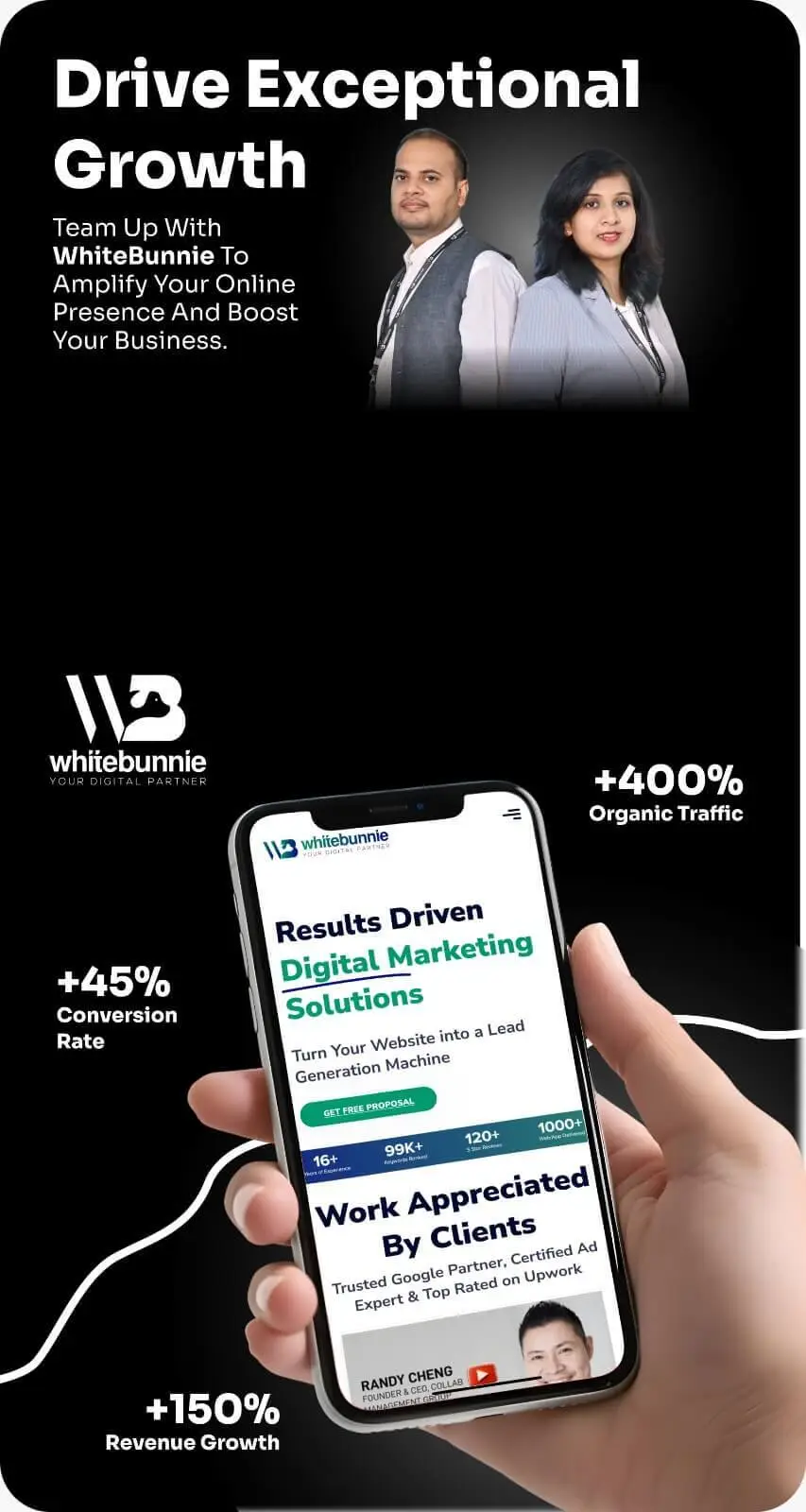


Best LLM Tracking Tools in 2026 to Measure AI Search & Brand Answer Visibility
-
Author
Neha Garg -
Publish
March 6, 2026 10:20 am -
Read Time
7 Min
 Lets talk










Fill in the Form below for a no-string attached free technical discussion.
People used to find brands through Google. That’s changing. In 2026, a growing number of buyers start their research by asking ChatGPT, Perplexity, or Google’s AI Overviews a direct question and taking the first answer they get. If your brand doesn’t appear in those answers, you don’t exist for that buyer even if you rank on page one.
That shift creates a real tracking problem. Traditional rank trackers tell you where you sit on a results page. They can’t tell you whether ChatGPT recommends your product when someone asks for the best option in your category. LLM tracking tools fill that gap.
At White Bunnie, we’ve tested and reviewed the tools that are actually useful for this job in 2026. This guide covers what to look for, which tools are worth your time, and how to use them without overcomplicating your workflow.
LLM tracking, also called AI search visibility monitoring, measures how often your brand appears inside AI-generated answers. The core metric most tools use is Share of Voice (SOV) the percentage of AI answers that mention your brand versus the total answers for a set of tracked queries.
The key distinction from traditional SEO tracking: LLMs don’t always link back to your site. They may mention your brand, summarize your content, or cite a competitor, all without producing a clickable result. You need a tool that reads the full response, not just the URL.
Real-world context: Backlinko reported LLM-driven traffic is up 800% year-over-year as of early 2026. But most of those visits don’t show up clearly in GA4 unless you’ve set up custom source tracking.
The core things a good LLM tracking tool should show you:
Profound launched in 2024 and raised a $20M seed round in June 2025. It’s built for teams that take AI search seriously. The platform tracks brand mentions and citations across ChatGPT, Perplexity, Google AI Mode, Google Gemini, Microsoft Copilot, Meta AI, Grok, DeepSeek, Anthropic Claude, and Google AI Overviews, the most comprehensive engine coverage of any tool in this space right now.
What stands out:
Pricing starts at $82.50/month (billed annually) for 50 prompts. Enterprise plans scale to cover larger prompt sets and more engines.
Best for: Enterprise brands and growth teams that need deep, multi-platform data and are ready to act on what they find.
Semrush added an AI Visibility Toolkit to its existing SEO platform. For teams already using Semrush for keyword research, backlink analysis, and content audits, this is the obvious choice everything lives in one place. It tracks brand mentions across ChatGPT, Google AI Overviews, Gemini, Claude, Grok, Perplexity, and DeepSeek.
What stands out:
Semrush One (the plan most marketing teams should use) starts at $199/month and includes the full SEO Toolkit plus AI visibility.
Best for: In-house SEO teams that want to connect AI search visibility with their existing keyword strategy and content pipeline.
Otterly AI takes a different technical approach. Most LLM trackers send prompts to language models directly. Otterly analyzes AI search platforms including ChatGPT’s web browsing, Google AI Overviews, and Perplexity as live search interfaces. This means it captures citation links and source URLs, not just mention text.
What stands out:
Otterly offers a free tier for teams that want to test before committing. Paid plans scale with prompt volume.
Best for: Marketing teams that want to understand which pages get cited in AI answers and why.
Peec AI launched in 2025 and raised a €21M Series A in rapid succession after its €5.2M seed round. The platform covers ChatGPT, Perplexity, and Google AI Overviews by default, with Claude, Gemini, DeepSeek, Grok, and others available as paid add-ons. It focuses on brand visibility and sentiment across a clean, focused interface.
What stands out:
Starter plan is €89/month for 25 prompts. Pro is €199/month for 100 prompts.
Best for: Agencies and brand teams that want clean competitor intelligence and don’t need overly complex dashboards.
Keyword.com, originally a traditional SERP tracker, has grown into a hybrid tool that connects organic rankings with LLM visibility. It tracks how your brand and content are cited across ChatGPT, Claude, Gemini, and Google AI Overviews, right down to which specific URLs get pulled and which prompts trigger them.
What stands out:
Best for: SEO teams that don’t want to run two separate tools for organic search and AI visibility.
The space is moving fast. New tools launch regularly, and existing ones add features quarterly. Here’s what matters most when choosing:
One honest caveat: LLMs are non-deterministic. The same query can produce different results in the same minute. Good tracking tools run repeated queries and aggregate the results to produce stable estimates. A single data point is noise, consistent sampling over time is signal.
Buying a tracking tool doesn’t improve your AI visibility. It shows you where you stand. Here’s how to actually use what you find as part of a broader AI SEO strategy:
AI search visibility is no longer a future consideration. It’s a present-day gap in most brands’ measurement stack. The tools in this guide Profound, Semrush, Otterly AI, Peec AI, and Keyword.com, each cover that gap differently, and the right choice depends on your team size, budget and how you currently work within a broader search everywhere optimization strategy.
At White Bunnie, we think the most useful starting point is picking one tool, setting a baseline, and checking it consistently over 90 days. What you learn in that period will tell you more than any feature comparison.

Neha founded White Bunnie in 2018. The agency specializes in SEO, AEO, and GEO for B2B IT services, SaaS, and ITES companies targeting global markets. Their work has helped brands move from zero visibility to consistent AI citations across various popular AI platforms like ChatGPT, Perplexity, and Gemini.

If you’ve seen organic traffic or CTR drop despite steady rankings, generative AI might be the reason. AI cannibalization occurs […]
Read Post »
You know that feeling when your phone buzzes with a message from a friend? It’s immediate. You want to open […]
Read Post »
In 2025, the way people find information online is changing fast. Instead of just typing short keywords into Google, users […]
Read Post »
Copyright © 2026 White Bunnie -All Rights Reserved