

Internal Linking: Building a Strong Internal Linking Strategy
-
Author
Saurabh Garg -
Publish
May 13, 2025 9:55 am -
Read Time
8 Min

 Lets talk









Fill in the Form below for a no-string attached free technical discussion.
When it comes to SEO, internal linking often gets overlooked in favor of strategies like keyword optimization and backlinks. But did you know building a solid internal linking structure is one of the most effective ways to boost your website’s visibility and user experience? Done right, internal linking can improve your SEO performance, help visitors find relevant content, and guide search engines to better understand your website.
Internal linking is the practice of connecting one page on your website to another page on the same website. These aren’t just random connections—they’re strategic pathways that guide both users and search engines through your content. Think of them as the roads and highways of your digital property, directing traffic to important destinations. The traditional way to approach internal links is to sprinkle them throughout your content wherever relevant.
These links serve two critical purposes:
Improving navigation – Internal links guide your visitors to helpful, relevant pages, making it easy for them to explore your website.
Boosting SEO – Search engines use internal links to crawl and index your website’s pages. A strong internal linking structure signals which content on your site is most valuable, helping boost your rankings for specific keywords. If you’re just getting started with search engine optimization, make sure you understand that What is SEO to better implement linking strategies.
Internal linking remains one of the most consistently undervalued tactics in SEO strategy. Analytics consistently show that sites with robust internal linking structures demonstrate significant improvements in key metrics compared to those without. While internal linking might not have the allure of other SEO techniques, it serves as a foundational element that can dramatically improve site performance while requiring relatively little technical expertise.
Constructing an effective internal linking strategy isn’t complicated, but it requires thoughtful planning. Here’s how to implement one that works for your website:
The foundation of your internal linking efforts begins with a clear, logical website structure. Think of your website as a pyramid:
An organized structure ensures every page has a clear purpose and is easy to interconnect. Aim for a “three-click rule,” meaning users should be able to access any page on your site within three clicks from your homepage.
Anchor text is the clickable text of a hyperlink. Avoid generic phrases like “click here” or “read more.” Instead, use descriptive, keyword-rich anchor text that provides context about the linked page (e.g., “learn more about website structure”).
Example: Linking to “How to Optimize Your Website Structure” within this blog uses strategic anchor text.
You can also identify internal linking opportunities using Screaming Frog N-GRAM feature to make the process more efficient.
Use internal links to highlight the pages that are most important to your website, such as service pages, pillar content, or high-performing blog posts. Link to these pages from multiple parts of your site to signal their importance to visitors and search engines.
While it’s tempting to overload high-authority pages with internal links, ensure that your entire site benefits from link juice. Distribute links evenly across relevant pages. This balance helps improve the rankings of underperforming pages without creating a content hierarchy that feels lopsided.
Contextual links are placed within the body of your content. These links are more effective than navigation or footer links because they provide additional resources precisely where they’re needed. For example, linking to a “Beginner’s Guide to Link Building” in an article about SEO strategy adds value for the reader.
If you want your internal links to really work for you, here are some tried-and-true tips:
While internal linking is a powerful tool, misuse can backfire. Here’s what you should steer clear of:
If your website is on the larger side, keeping track of all your internal links can be a challenge. Fortunately, there are some great tools to help:
Yoast SEO: This plugin suggests relevant internal links as you write, making it easy to connect your content.
Screaming Frog: This tool crawls your site and helps you spot any missing or broken internal links.
Google Search Console: Use this to see which pages don’t have enough internal links and to monitor your site’s overall health.
Getting your internal linking right can make a huge difference in how both visitors and search engines experience your website. Not only does it help people find what they’re looking for, but it also keeps them engaged and boosts your SEO. By keeping your links relevant, using clear anchor text, and regularly checking your site, you’ll set yourself up for better results.
Try putting these tips into action and see how much smoother your site runs-and how much your traffic improves!

Saurabh Garg, the visionary Chief Technology Officer at Whitebunnie, is the driving force behind our cutting-edge innovations. With his profound expertise and relentless pursuit of excellence, he propels our company into the future, setting new standards in the digital realm.

Google has made one thing very clear between 2022 and 2026: generic content will not survive. Core updates, the Helpful […]
Read Post »
Tracking your website’s performance is not a luxury; it is a necessity. For businesses in India, where digital competition intensifies […]
Read Post »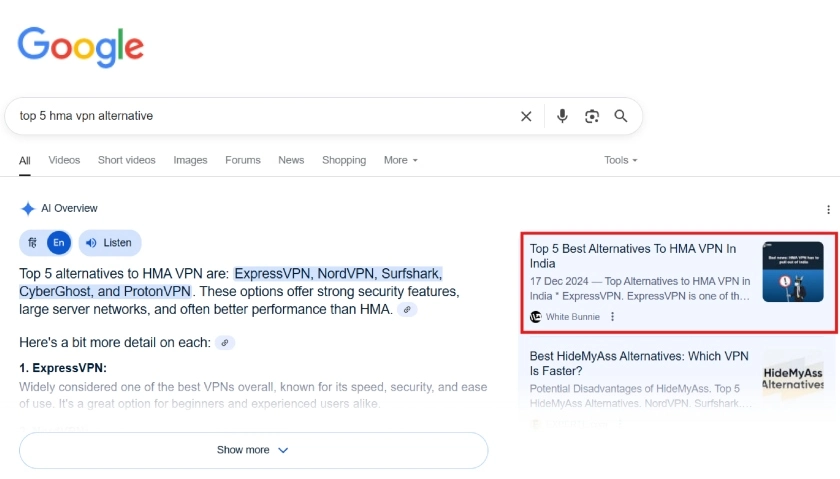
Landing a spot in Google’s AI-generated search results has become a real boost for businesses and creators alike. As Google’s […]
Read Post »
Copyright © 2026 White Bunnie -All Rights Reserved