


Content Pillars: Creating In‑Depth Content Hubs
-
Author
Saurabh Garg -
Publish
June 20, 2025 6:26 am -
Read Time
6 Min

 Lets talk











Fill in the Form below for a no-string attached free technical discussion.
In 2025, content pillars are no longer a buzzword—they’re the backbone of effective SEO and audience trust. What once began as simple topic clusters has evolved into dynamic, data-driven ecosystems designed to satisfy both users and search bots. Below, you’ll find a clear breakdown of why pillars matter now, how to build them, and what’s working for brands today.
Nearly 46% of B2B marketers expect their content marketing budgets to rise in 2025, with over half investing more deeply in thought‑leadership pieces and long-form hubs. These hubs help brands stand out in a crowded content landscape.
Pillar content not only improves your topical authority—it creates synergy within your entire site. A case study cited a client doubling website traffic in just three months using a strategic pillar-and content cluster model. That’s not theory: it’s proven performance.
Think of this as your cornerstone—a comprehensive, in-depth guide (think 2,000+ words) on a broad topic. It acts like a table of contents, leading users to related subtopics. It’s built to be authoritative, browsable, and often bookmark-worthy.
These are the detailed follow-ups—specific questions or narrower keywords tied to your pillar. Each spoke links back to the hub (and often cross-links to other spokes). This architecture boosts crawlability, prevents content cannibalization, and supports content pruning when older or underperforming posts need consolidation.
Smart internal linking is your connective tissue. Think definition boxes, ordered lists, tables—all using targeted anchor text. This not only organizes content logically but also sculpts your chances at featured snippets.
Use breadcrumb schema, hierarchical URLs, and intuitive navigation to reinforce topic structure. Hub-and-spoke or library-style layouts make consumption smoother and signal relevance to Google
Choose a broad yet targeted topic that balances search interest and business relevance. Tools like SEMrush or Ahrefs can help you identify a theme with enough monthly volume and viable subtopics.
Group keywords by search intent—Do they seek answers, products, opinions or tools? Segment into learning-focused hub topics and conversion-driven spokes. Make sure each subpage targets a unique angle.
Map your pillar page architecture. Start with a narrative intro, then chunk content via clear H2s/H3s. Insert a table of contents with jump links. Plan 10–15 supporting cluster posts to answer specific questions and showcase quality content writing
Write a deep, 2,000+ word pillar—include visuals, use cases, data, and embedded definitions. Cluster blogs should be 800–1,500 words, focused, insightful, and optimized with CTAs to explore further. According to 2025 data, combining deep hubs with backlinks doubled site traffic in 90 days.
Launch your pillar and cluster pages simultaneously. Ensure uplinks and backlink outreach. Share across email and social—pillars perform best with multi-channel promotion .
Use analytics to track views, dwell time, bounce rates, and keyword performance. Refresh hubs regularly—update stats, add new examples, and adjust the structure as topics evolve .
Hotjar’s “usability testing” hub is a textbook model. A central, overview-rich page links to deep dive guides on templates, tools, interviews, and metrics—a clean hub-and-spoke model praised by SEO experts.
American Express curates trends and insights through an organized hub structure—combining articles, infographics, and reports in a searchable, user-friendly portal . That consistency builds credibility and returning engagement.
| Step | Why It Matters |
| Choose data-backed topics | Ensures demand and business alignment |
| Build a 2,000+ word pillar | Signals depth and authority to search engines |
| Publish 10–15 supporting spoke pages | Covers long-tail queries and avoids keyword cannibalization |
| Create smart internal linking & hyperlink structure | Supports crawlability and user navigation |
| Design clear hub-and-spoke architecture | Improves UX, engagement, and dwell time |
| Promote & update consistently | Keeps your hub fresh, authoritative, and engaging |
Content pillars in 2025 are evolving from static guides into responsive ecosystems:
Content pillars remain one of the most potent SEO structures in 2025—but with added complexity. The best hubs are deep, strategically interconnected, and constantly evolving. Real data shows they command authority, elevate traffic, and strengthen brand perception.
Start small: build one high-value pillar, add its spokes, link them all together, and promote it widely. Track performance, learn, refresh. From there, expand your content empire.
In short, content pillars are no longer optional—they’re essential. When built thoughtfully, they form evergreen hubs that search engines love, users rely on, and competitors envy.

Saurabh Garg, the visionary Chief Technology Officer at Whitebunnie, is the driving force behind our cutting-edge innovations. With his profound expertise and relentless pursuit of excellence, he propels our company into the future, setting new standards in the digital realm.

If you think about being at the top of Google searches, and lots of people finding your website easily is […]
Read Post »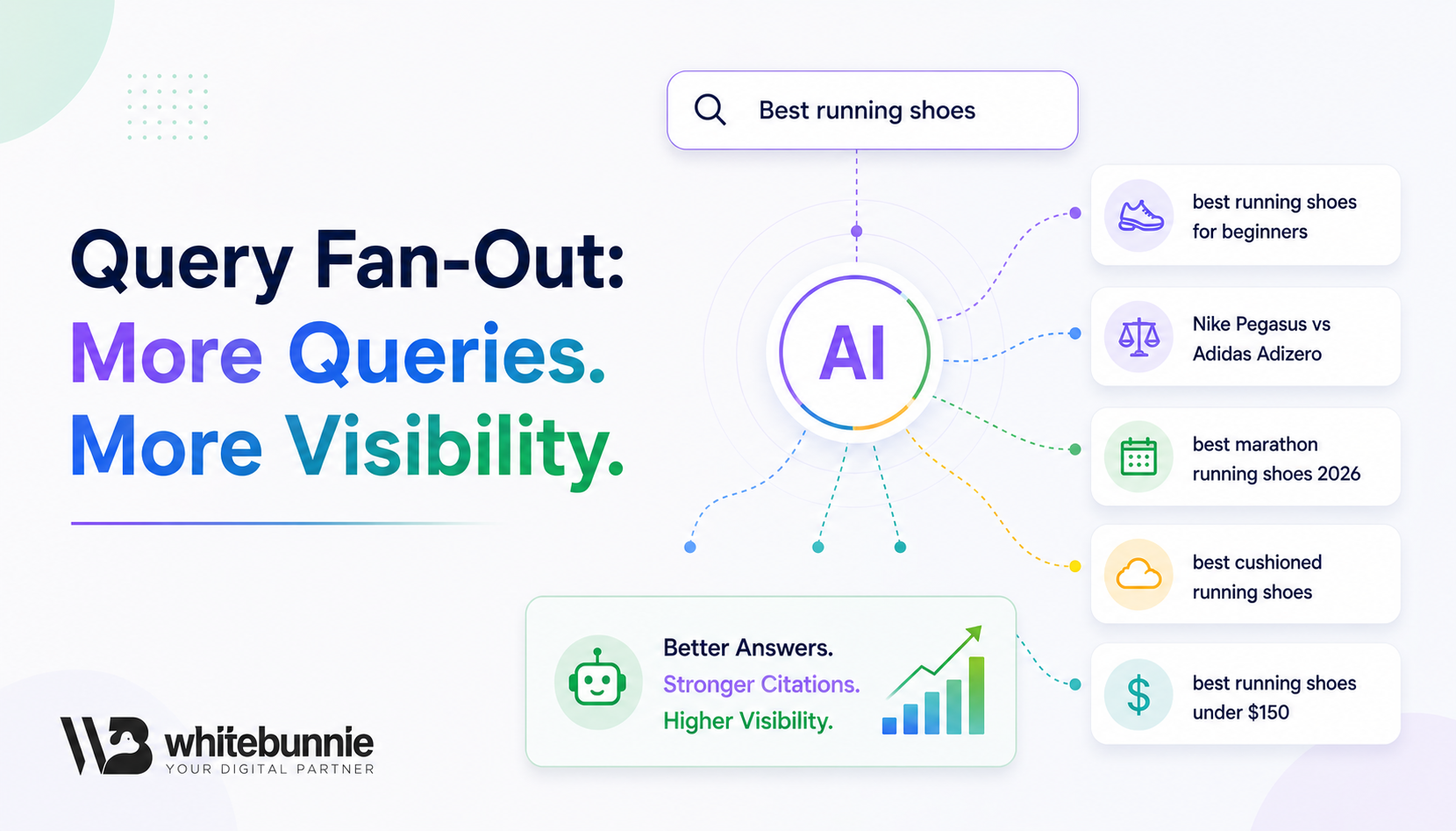
TL;DR: Query fan-out is the process by which an AI search engine turns one question into many smaller searches. It […]
Read Post »
Most B2B websites have a content problem that looks different from what they expect. The problem is not too little […]
Read Post »
Copyright © 2026 White Bunnie -All Rights Reserved