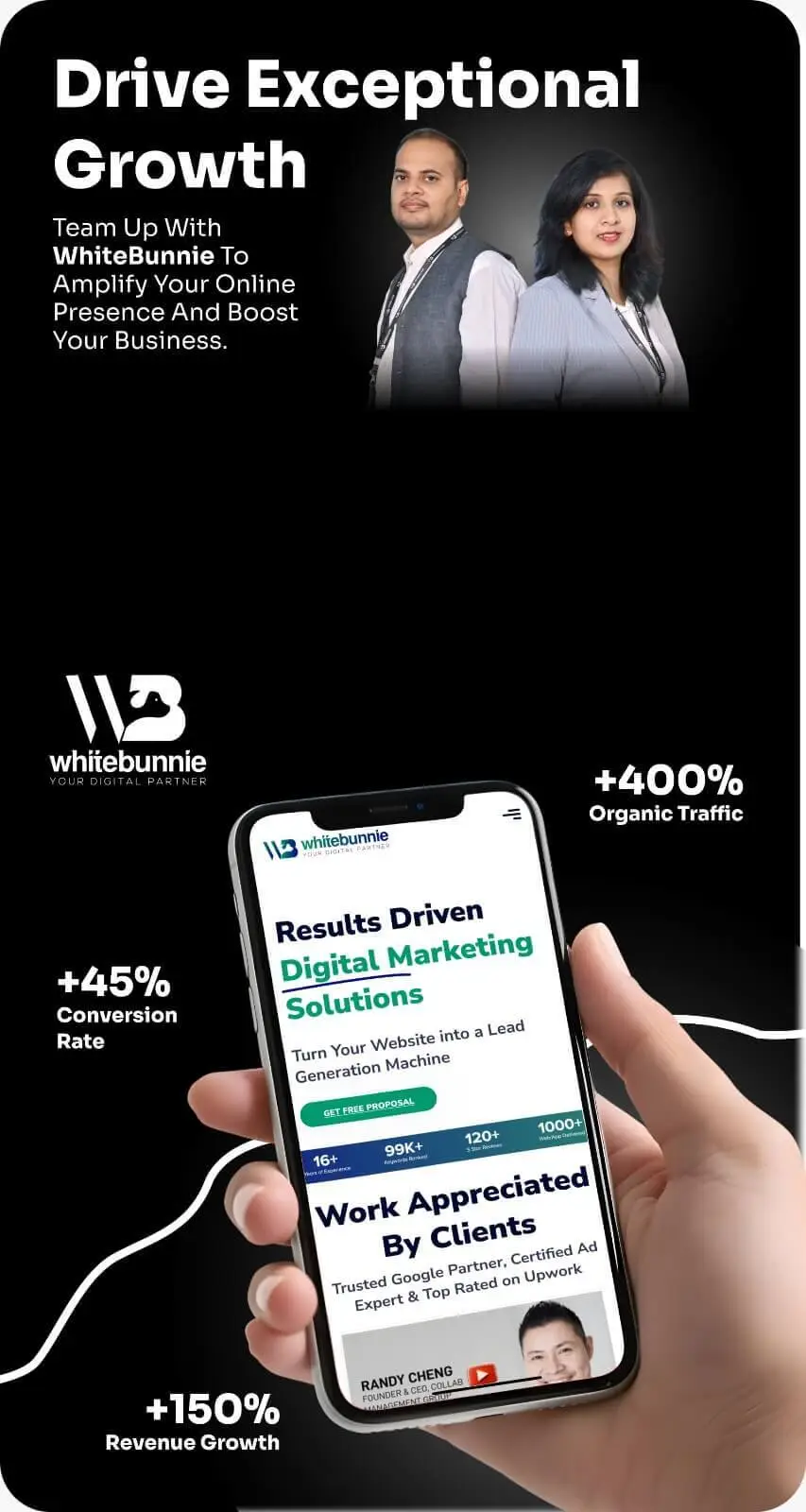


Zomato’s AI Playbook: How MCP Servers Are Redefining Customer Journeys
-
Author
Neha Garg -
Publish
February 5, 2026 5:16 am -
Read Time
7 Min
 Lets talk











Fill in the Form below for a no-string attached free technical discussion.
You’re craving your favorite dish. Instead of opening a food delivery app, you tell an AI assistant, “Find me a spicy biryani under ₹300 nearby.” Within seconds, the AI browses Zomato’s database, suggests a top-rated restaurant, adds the biryani to your cart, and even generates a payment link all through a chat. You never touched the Zomato app. Zomato’s latest AI integration, powered by something called an MCP server, is changing how we discover and order food. This shift is part of a much larger move toward AI-first discovery and generative search visibility, where conversations replace clicks and prompts replace searches. As White Bunnie, we’ve been keeping a close eye on this evolution. In this blog, we break down what Zomato’s AI playbook entails and why it matters for marketers and tech professionals alike.
MCP stands for Model Context Protocol an open framework introduced by AI research firm Anthropic in late 2024. In simple terms, MCP lets AI systems like ChatGPT or Claude connect to real-world services and data in real time. Think of it as a bridge that allows an AI “agent” to not only fetch information but also perform actions on your behalf. Instead of being limited to its training data, an AI assistant with MCP can access live data through secure, authorized channels and execute tasks via approved APIs. In many ways, this mirrors how retrieval-augmented generation (RAG) based content strategy enables AI systems to pull live, contextual data rather than relying only on static knowledge. In short, MCP gives AI the muscle to get things done, not just talk.
For example, suppose you ask an AI to book a table or order a meal. The MCP server acts as a translator and turns your request into actual steps. It searches the database, retrieves menu items, adds items to your cart, and even initiates the payment process. In this way, an MCP server connects the AI’s “brain” to real-world business services.
On October 22, 2025, Zomato released its own MCP server, becoming one of the first major consumer apps to embrace this AI-driven approach. So what does this mean for you as a user? It means you can converse with an AI assistant to handle your entire Zomato order without lifting a finger. Here are some things Zomato’s AI integration can do:
All of this happens through a simple conversation with an AI. No manual app navigation. No scrolling through endless lists. A single prompt can replace what used to be many minutes of tapping and swiping on your phone. This is a textbook example of optimizing content for conversational and AI-driven discovery, where intent is understood without structured queries.
Real-World Example: Early adopters have already tested this new system. In one case, a user asked Claude (an AI chatbot) to “get me something spicy under ₹300 near MG Road.” The assistant fetched a list of nearby options within that budget, complete with restaurant names, ratings, and delivery times. The user picked one dish, and the AI added it to the cart. The assistant then generated a UPI QR code for payment, which the user scanned to confirm the order all without ever opening the Zomato app.
Zomato’s foray into MCP is more than a nifty tech experiment; it signals a major shift in digital customer behavior. Here’s why this move is significant:
Instead of clicking buttons or typing into search bars, users can simply say what they want. The interface becomes a conversation. By describing your craving in everyday language, you let the AI do the heavy lifting. This aligns closely with how brands get discovered inside AI chatbots instead of search engines, where clarity of intent matters more than keywords.
AI can now handle complex tasks from beginning to end. What used to require jumping between search, menu, and checkout screens is managed by the assistant in one go. A process that once took numerous app interactions is boiled down to a single request, reinforcing the rise of generative engine optimization (GEO) over traditional funnel-based journeys.
In an AI-first world, the app itself becomes less visible. Customers might not open the Zomato app or website at all – the AI agent is their main touchpoint. Zomato’s MCP server hints at a future where brands are accessed through AI intermediaries. The app runs in the background, but the customer’s attention is on the conversation. Businesses need to prepare for a reality where users complete their journey inside an AI platform, not on the company’s own app or site.
An AI assistant plugged into Zomato understands your context—location, order history, dietary preferences. That means every interaction can be tailored. Behind the scenes, this personalization is powered by entity SEO and AI-driven decision systems, which help AI models decide which brands, products, or services best match a user’s intent. While this improves convenience, it also raises questions about transparency and bias in AI recommendations.
Zomato’s AI playbook offers a preview of the challenges and opportunities ahead for businesses. Here are a few key implications to consider:
Discoverability shifts: If consumers start asking AI assistants for things (dinner plans, shopping suggestions, travel options), will your brand appear in those answers? Traditional SEO aimed at Google searches won’t be enough. Now companies need to think about AI visibility. This means structuring content and data so that AI models recognize your brand as relevant and trustworthy. In the age of ChatGPT, being the answer is the new page-one ranking.
New competition for attention: In chat-based interactions, an AI might surface only one or two options. Unlike traditional SERPs, there’s limited real estate. This makes it critical to understand how AI decides which brands to recommend, as even small differences in ratings, relevance, or trust signals can determine visibility.
Integration is key: To stay in the game, businesses must integrate their services with AI platforms. Zomato’s move with MCP is a blueprint, and others are following suit. Indian fintech companies like Zerodha (stock trading) and Razorpay (digital payments) have built MCP connectors so that AI agents can perform tasks on their platforms. We can imagine travel sites, e-commerce platforms, and banks doing the same soon. Companies that provide accessible APIs or plugins for AI assistants will have a better chance of being included in the user’s AI-driven journey.
Rethinking customer loyalty: If a smart agent is “driving” the purchase decision, brands will need new ways to maintain customer loyalty. An AI might choose the option with the best deal or highest rating for the user, regardless of brand name. This means your brand’s value – quality, price, service – must be reflected in the data that AIs look at (like reviews and ratings). It also puts pressure on maintaining excellence, because even one bad review or a small price difference could sway the AI’s choice.
Zomato’s strategy shows that the company is betting on an AI-first future – and it isn’t alone. Around the world, tech giants from OpenAI to Google are rolling out similar AI-to-service integrations. We are moving into an era where AI becomes the primary interface for many day-to-day tasks a smart layer on top of all our apps and websites.
For businesses, this shift is both exciting and challenging. On one hand, it promises more seamless and tailored customer experiences. On the other, it forces companies to rethink how they reach and retain customers. The ground rules of digital marketing and customer engagement are changing. Companies that adapt – by making their data AI-ready, offering secure integrations, and embracing conversational interfaces – will lead the pack. Those that hesitate might find themselves invisible in a world where consumers “ask” instead of “search.”
Zomato’s use of MCP technology is redefining what a customer journey looks like. Ordering dinner can now be as easy as chatting with an assistant. It’s a prime example of how AI can simplify user experiences by cutting out steps and anticipating needs. For marketers and tech professionals, this is a clear signal that the way customers find and interact with products is changing fast. Businesses should respond by making themselves AI-ready. At White Bunnie, we approach these developments with calm confidence, helping brands navigate the AI-driven future of customer engagement without the hype. The takeaway is simple: the age of AI-assisted customer journeys is here, and those who prepare for it today will be the winners tomorrow.
Disclaimer:
This article is based on publicly available information, industry reports, and illustrative examples intended to explain emerging AI concepts. References to MCP, AI assistants, and Zomato workflows are for explanatory purposes and may include hypothetical or early-stage use cases. Features, timelines, and integrations described may evolve, differ by region, or may not be officially released or supported by the companies mentioned. This content does not imply any formal partnership or endorsement by Zomato, Anthropic, or other third-party platforms.

Neha founded White Bunnie in 2018. The agency specializes in SEO, AEO, and GEO for B2B IT services, SaaS, and ITES companies targeting global markets. Their work has helped brands move from zero visibility to consistent AI citations across various popular AI platforms like ChatGPT, Perplexity, and Gemini.
Key takeaways GA4 in 2026 shifted from reporting to decision support, AI insights, attribution clarity and planning. Analytics Advisor answers […]
Read Post »
The Confirmation B2B Marketers Have Been Waiting For For years, Google gave a consistent answer whenever anyone asked whether social […]
Read Post »
Performance Marketing in 2026 (Quick Summary) Performance marketing in 2026 is built on five pillars: AI-led bidding you direct rather […]
Read Post »
Copyright © 2026 White Bunnie -All Rights Reserved