


How to Rank in Google’s ‘People Also Ask’ Boxes: A Complete Guide
-
Author
Saurabh Garg -
Publish
August 25, 2025 6:46 am -
Read Time
8 Min
 Lets talk











Fill in the Form below for a no-string attached free technical discussion.
You see them all the time on Google: the “People Also Ask” (PAA) boxes. They pop up with questions related to your search, giving you a quick path to the answers you need. For any business, these little boxes are a big deal. Landing a spot in one can boost your visibility, build your reputation as an expert, and bring interested visitors to your site.
We’ll walk through the best ways to find the right questions, create content that gets chosen and handle the technical side of things to help you secure these valuable spots on the search results page.
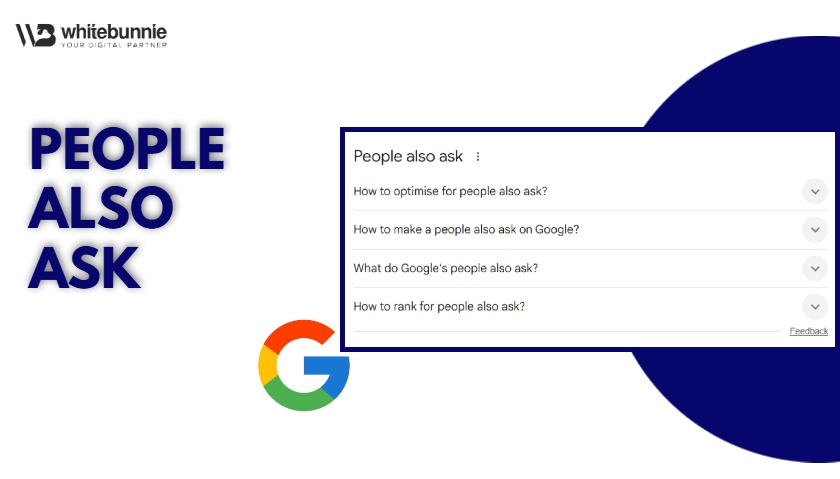
Google’s “People Also Ask” (PAA) boxes have become a regular feature in the search results, especially since their explosion across mobile and desktop searches. PAA boxes display follow-up questions closely related to your initial search, each with a direct answer and a link to the source. When a user clicks a question, more related questions appear, helping them dig deeper into a topic.
For marketers and website owners, ranking in these boxes can bring real benefits:
Prime visibility above the standard results.
A chance to reach users early in their research process.
More clicks, even if your site isn’t at the top of organic results.

The prominence of PAA has grown sharply over the past few years. In 2025, more than 80% of search queries now show PAA boxes, meaning most users will interact with this feature as part of their Google journey. Unlike featured snippets (of which there’s only one per page), there can be several PAA slots—giving smaller brands more chances to get noticed. This makes Rank Zero optimization critical, as it ensures your content is visible even before traditional rankings come into play.
Google updates the PAA boxes constantly, using real user queries and live search intent signals. Here’s what matters most:
User search intent: Google favors answers that match what real people ask.
Answer clarity: The actual snippet is pulled from web content that’s clear and direct.
Answer format: Paragraphs, bullet lists, and videos work, so match your answer to what appears in PAA for your keywords.
Popularity: Common questions get priority in PAA, especially when many searchers ask similar things.
Location relevance: For local searches, the PAA can change based on the user’s geography.
Use tools like AlsoAsked or Google’s autocomplete to surface popular questions.
Check PAA boxes for your target keywords and note what’s missing from competitors.
Expand the accordion for more ideas and group the most frequent or high-volume questions.
Study the context behind each question—what is the user really trying to solve?
Group questions by awareness (broad research) and branded queries (product-specific), so you cover the whole funnel.
Use clear headings (H2/H3), concise paragraphs, and bullet points that directly answer each question.
Format answers so Google can pull snippets easily. For example:
Short, direct sentences for paragraph-based PAA.
Lists for step-by-step or multi-part questions.
Prioritize long-tail, conversational keywords that match how users speak and ask questions.
Add terms that relate to the specific topic but also to broader associated ideas. Semantic keywords help Google understand your content’s context.
Write answers that get to the point. Avoid fluffy language or filler.
Reference credible sources and link to additional authoritative details if needed for trust.
Make answers readable and useful, especially for mobile users. Most PAA clicks happen on mobile.
Create dedicated FAQ sections for groups of related questions.
Mark up your FAQ with proper Schema (FAQPage), making it easier for Google to extract answers.
Audit your pages regularly for new PAA opportunities.
Update outdated sections with new, relevant questions that users are currently asking.
Use Google Search Console and PAA monitoring tools to track appearances and clicks.
A local home services site faced stiff competition from national brands. They started answering common questions like “How much does gutter cleaning cost in Sydney?” or “Is professional gutter cleaning worth it?”. By adding direct, well-structured answers (using concise paragraphs and cost tables when appropriate), they began to rank in PAA slots for dozens of city-based queries within two months. They monitored competitors’ answers and adapted their own style to stay ahead.
| Step | Description |
|---|---|
| Identify Questions | Use tools and search to collect high-frequency PAA questions. |
| Understand Intent | Group by research phase and user goals. |
| Answer Clearly | Format for direct extraction; use bullets, lists, short paragraphs. |
| Use Semantic Keywords | Prioritize long-tail, conversational terms and broader context. |
| Upgrade Readability | Aim for easy scanning and mobile use; keep reading score high. |
| Add FAQ + Schema | Mark FAQs and answers with correct schema. |
| Track & Refresh | Audit rankings and update with new questions regularly. |
Structure content for clarity: Organize content with headings, lists, and tables where needed.
Use active voice: Direct answers rank best; skip fluffy language and adverbs.
Focus on real value: Give users what they want, avoid generic advice.
Keep updating: Google changes questions and priorities often; stay on top of new trends.
Aim for high readability: Short sentences and simple words boost your Flesch reading score.
Ranking in Google’s “People Also Ask” boxes in 2025 means focusing on what users actually search for, answering their questions clearly, and structuring your site so Google can easily extract those answers. Whether you’re a global brand or a local business, this is one of the most efficient ways to gain prime visibility, grow traffic and establish topical authority—without competing head-to-head for the top organic slots.
White Bunnie recommends auditing your current content now and targeting the PAA slots that make sense for your niche. With clear, confident answers and smart optimization, the PAA box can become a powerful SEO lever for your business.

Saurabh Garg, the visionary Chief Technology Officer at Whitebunnie, is the driving force behind our cutting-edge innovations. With his profound expertise and relentless pursuit of excellence, he propels our company into the future, setting new standards in the digital realm.

Let’s be honest—PR in 2025 is way more than sending out press releases or scrambling to clean up messes. It’s […]
Read Post »
The best AI SEO agencies in India for B2B SaaS companies in 2026 include White Bunnie, ThatWare, Infidigit, Growfusely, and […]
Read Post »
Search in India has changed in a way that most businesses never prepared for. A user now moves across formats […]
Read Post »
Copyright © 2026 White Bunnie -All Rights Reserved