

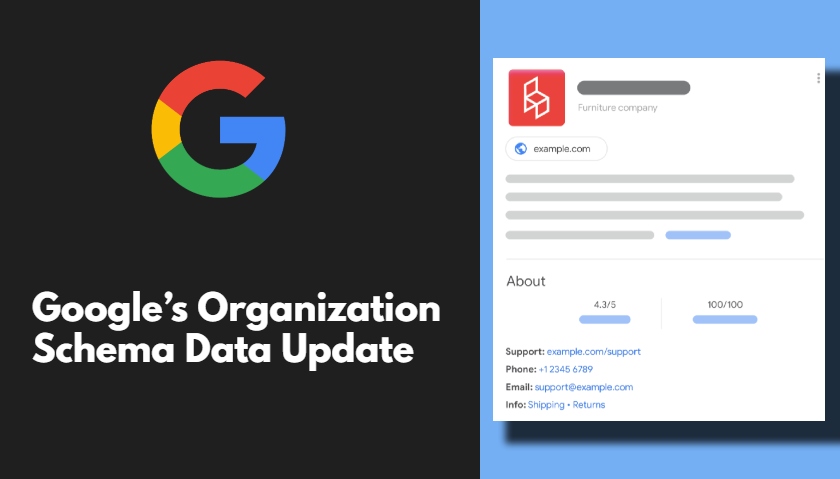
Google’s Organization Schema Data Update: What’s New and How to Use It Effectively
-
Author
Saurabh Garg -
Publish
July 12, 2025 11:08 am -
Read Time
6 Min
 Lets talk











Fill in the Form below for a no-string attached free technical discussion.
Improving your website’s SEO and search rankings just became more accessible. On June 10, Google announced a significant update to its Organization schema type. This change can elevate your website, brand, and online presence to new heights. But how can this update benefit your brand, and how should you implement it? Let’s explore the full impact of this update and how to use it strategically.
Old Functionality and Shortcomings
Previously, when you added Organization schema to your website, it typically included only basic details: name, address, email, and phone number. While this information helped search engines understand your business, it had a major limitation—it didn’t allow for the inclusion of loyalty programs, memberships, or specific offers. As a result, AI systems and chatbots struggled to recognize and highlight your brand’s unique features.
In today’s digital age, online business and branding have reached new levels of sophistication. Customers expect to see information about loyalty programs, memberships, and extra benefits. Google also wants to understand these new data points so it can deliver more relevant results to users. Previously, such data was not supported in the Organization schema, prompting Google to make this important update.
Google’s updated schema now supports not just company name and address, but also data related to loyalty programs, memberships, and special offers. This allows your website to provide much more comprehensive information.
The updated schema now allows you to add:
Loyalty programs (e.g., Gold/Silver memberships)
Exclusive offers and benefits
Return policies
Membership points or tiers
This added flexibility makes your brand’s online presence richer and more informative.
With this update, you can include all essential brand information in your website’s schema markup. When you add details about credits, membership tiers, and benefits, Google and AI systems can directly interpret this data. This is especially beneficial for rich search results, featured snippets, and AI-powered chatbots, making your brand more visible and accessible.
Begin by gathering all relevant brand data, including:
Company name and website URL
Social media links
Contact email and phone number
Office address
GST number, business ID, or any government registration number (if applicable)
It’s best to add this information to your key pages, such as your homepage, contact page, or About Us page.
All this data should be structured in JSON-LD format. Here’s how you can do it:
Set the context as "schema.org".
Use the type "Organization" or "OnlineStore" as appropriate.
Add your brand name, URL, social media links, and contact details.
For loyalty programs or memberships, create sub-types like "Membership" tiers, benefit descriptions, etc.
Insert this schema markup in the <head> section of your website for SEO benefits.
{
“@context”: “https://schema.org”,
“@type”: “Organization”,
“name”: “Your Brand Name”,
“url”: “https://yourwebsite.com”,
“contactPoint”: {
“@type”: “ContactPoint”,
“telephone”: “+91-XXXXXXXXXX”,
“contactType”: “customer support”
},
“sameAs”: [
“https://facebook.com/yourbrand”,
“https://instagram.com/yourbrand”
],
“memberOf”: {
“@type”: “ProgramMembership”,
“name”: “Gold Membership”,
“membershipNumber”: “123456“,
“programName”: “Your Loyalty Program”,
“member”: {
“@type”: “Person”,
“name”: “Customer Name”
}
}
}
Add this schema only to your main pages (such as the homepage or contact page).
Avoid adding heavy schema markup to every page, as it may slow down your website.
Regularly update your schema data so search engines can recognize new changes.
This update increases your chances of being featured in rich snippets. Your website’s details—such as brand name, loyalty points, or membership tiers—can appear directly in search results. This can boost your click-through rate and drive more traffic.
AI systems can now accurately access information about your loyalty programs and memberships. This enables them to provide better recommendations to users, enhancing customer satisfaction.
With this update, you can rank faster than competitors. Platforms like Google, ChatGPT, and Bing will better understand and promote your programs, giving your brand greater visibility.
Set up the new schema on your main pages.
Review your schema implementation regularly after adding new features.
Keep your data simple and precise so AI can easily interpret it.
If available, review case studies for additional strategic insights.
This update is a valuable opportunity to boost your website’s performance in both SEO and AI-driven platforms. Don’t ignore it—implement the new schema correctly so Google, chatbots, and other AI systems can easily recognize and promote your brand.
Google’s major update to Organization schema data is a significant step toward taking your business to the next level. By implementing the new schema, you can achieve rich snippets, better rankings, and a stronger brand presence. Start updating your website information and follow these tips to enhance both your website and your online presence.
Design your website’s schema thoughtfully and make the most of this important update!

Saurabh Garg, the visionary Chief Technology Officer at Whitebunnie, is the driving force behind our cutting-edge innovations. With his profound expertise and relentless pursuit of excellence, he propels our company into the future, setting new standards in the digital realm.

Want your products to show up when someone asks ChatGPT what to buy? Here’s how to make that happen. TL;DR […]
Read Post »
LinkedIn has always been the go-to spot for networking, job searches, and sharing professional milestones. But in 2025, the platform […]
Read Post »
People used to find brands through Google. That’s changing. In 2026, a growing number of buyers start their research by […]
Read Post »
Copyright © 2026 White Bunnie -All Rights Reserved