












Week in Brief
- A quieter week for rankings. No confirmed algorithm activity, but a busy week for platform and measurement updates.
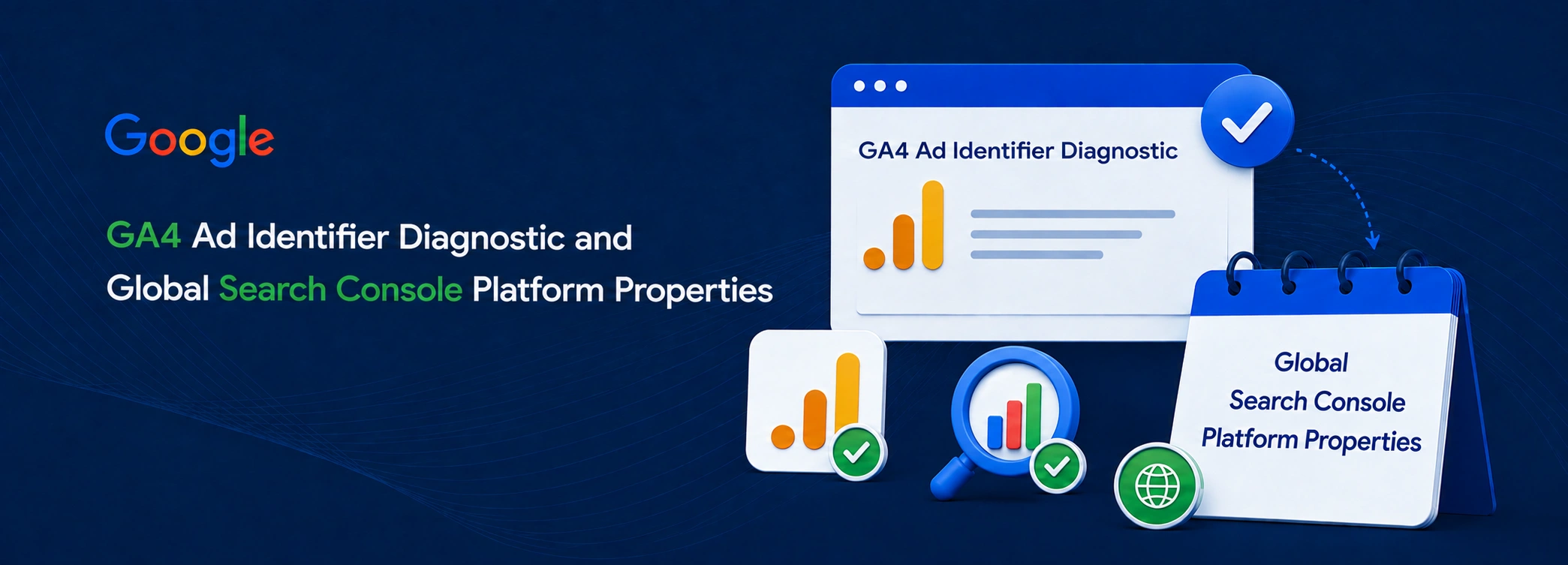
- GA4 added a diagnostic on July 31, 2026 that flags campaign URLs missing aggregate ad identifiers such as GBRAID and gad_, which quietly distort paid attribution.
- Google made Search Console platform properties globally available and published a new guide for measuring social and video content on July 29, 2026.
- Perplexity shipped a Source Context Panel and a Check Sources feature on July 27, 2026, changing how readers inspect and verify the sources behind an AI answer (Perplexity changelog).
- The 17 August Smart Bidding enforcement date for budget-limited Target CPA and Target ROAS campaigns is now two weeks out.
GA4 adds a diagnostic for missing aggregate advertising identifiers, protecting paid attribution accuracy
On July 30, 2026, Google Analytics 4 introduced a diagnostic for aggregate parameter issues that flags campaign URLs where aggregate identifiers, including GBRAID and gad_, are missing. When those parameters are stripped from a landing-page URL, GA4 loses the signal that ties the visit to paid, so the click can misattribute to organic or direct. The diagnostic identifies the affected URLs and gives guidance to fix them.
What this GA4 attribute diagnostic means for B2B, ITES, and SaaS
This protects B2B and SaaS advertisers who judge Google Ads performance inside GA4. If GBRAID or gad_ is being stripped, often by a redirect, a consent tool, or a tag-manager misconfiguration, your paid channel looks weaker than it is and organic or direct looks stronger. Teams that move budget on GA4 attribution can end up cutting paid spend that is actually working. It is suggested to open the new diagnostic in GA4 and fix the redirect or tag stripping GBRAID or gad_ from any high-spend campaign URL it flags.
Search Console platform properties go global, with a new guide for measuring social and video content
On July 29, Google’s Search Central Blog announced that platform properties in Search Console are now globally available to everyone, and published a guide on analysing social and video content performance. Platform properties, first announced on July 07, let you verify an Instagram, TikTok, X, or YouTube account and see how its posts perform on Google Search, Discover, and News. You can see which search terms lead people to that content.
What this Guide will help with for B2B, ITES and SaaS Companies
For most B2B and SaaS companies, the two platforms that matter here are YouTube and X. If you run product demos on YouTube or founder-led content on X, you can now see which Google searches surface those posts, and compare that pull against your own pages for the same queries. Companies with no active YouTube or X presence get little from this. If you publish demos on YouTube or founder content on X, add each as a Search Console platform property and check the search terms driving impressions.
Brands with strong video or creator-led strategies should compare:
- Google Search queries leading to social content
- Search impressions versus platform reach
- Brand and non-brand discovery
- Videos receiving impressions but few clicks
- Topics that should also be developed on the company website
Perplexity adds a Source Context Panel and Check Sources, changing how AI answer citations are inspected and verified
Perplexity’s July 27 changelog added two source-facing features. The Source Context Panel keeps citations and supporting sources beside the answer, so a reader can open a cited page and read the passage without leaving the response. Check Sources verifies how well an answer’s claims are supported by the evidence it cites and flags statements that need a closer look. The same release put Claude Opus 5 across Perplexity Search. All three are confirmed in the official changelog.
What this Perplexity’s Source Context Update means for B2B, ITES, and SaaS
Generative Engine Optimisation (GEO), the practice of structuring content so AI models cite it in their answers, has mostly been measured one way i.e., were you cited. These two features shift the bar from being cited to surviving inspection. When a reader can open your cited page beside the answer, and Check Sources grades how well your line supports the claim, a citation earned by thin or generic text is easy to discount. Companies whose cited pages carry a specific, verifiable claim (a named figure, a dated source, a first-hand result) hold the reader’s attention inside the source panel. Pages cited for vague summary text are the ones exposed. In Perplexity, run your five highest-intent category queries and check whether the passage the Source Context Panel pulls from your page is specific or generic.
What to Focus Next Week
August 17 i.e. Smart Bidding enforcement for budget-limited target campaigns. Announced in mid-June and clarified in early July, this change pulls budget-limited Target CPA and Target ROAS campaigns back toward the target you set, instead of the better number Smart Bidding has been quietly hitting. The Bid Target Adjustment Tool has been live since 6 July. For B2B advertisers who cap budgets on Target CPA campaigns and have been beating target, cost per lead can rise on August 17, 2026 with no other change. Audit this week: filter for “Limited by budget,” compare each campaign’s set target to its real 30-day cost per lead, and lower the target where the campaign comfortably beats it.
White Bunnie Observation
The Perplexity citation changes connect to a pattern we have been tracking across our B2B SaaS accounts. When we audit which pages get cited in AI answers, and then which pages hold the citation once a reader inspects the source, the two lists are not the same. Pages that win a citation on generic category-definition text are the ones most likely to lose the reader once they open the source and find nothing specific. Pages built on a named figure, a dated source, or a first-hand result hold attention inside the source panel.
Questions We Were Asked This Week
The questions this week were less about whether the new features exist and more about what teams should change in practice. Here are the four answers that matter.
If GA4 flags a URL for missing GBRAID or gad_, does that mean the campaign stopped tracking?
Not necessarily. The diagnostic means GA4 is losing an aggregate advertising identifier somewhere between the ad click and the measured landing page. The visit may still appear in Analytics, but it can be credited to organic or direct instead of paid. Start with the exact URLs GA4 flags, then check redirects, consent handling, and tag-manager rules before changing campaign budgets.
Our YouTube channel is now a platform property in Search Console. It shows impressions but almost no clicks. Is that a problem?
Not on its own. Platform properties measure how your posts appear in Google Search, Discover, and News, not how they perform on YouTube itself. Impressions with few clicks usually mean you surface for queries where the searcher wants a fast answer, not a video. Check which queries drive the impressions. If they are high-intent and still earn no clicks, fix the title or the intent match; if they are broad awareness queries, low click-through is normal. Compare the same queries against your own website pages to see which format Google prefers to show.
Does Perplexity’s Check Sources feature improve our chances of being cited?
The update does not automatically make a page more likely to be cited. It makes the quality of an existing citation easier for readers to inspect. A generic definition may still be referenced, but a page with a named statistic, dated evidence, or first-hand result is more likely to hold attention when the supporting passage is opened beside the answer. The practical test is to inspect the exact passage Perplexity pulls from each priority page.
If readers can now read our cited passage inside Perplexity’s Source Context Panel, does being cited still help us?
Yes, and it matters more now. The citation is what puts your passage in front of the reader; the panel only lets them inspect it. A specific, verifiable passage works in your favour, because the reader sees a named figure or a dated claim and trusts the source. A generic passage is exposed. The click may not follow, but being the source a buyer inspects and trusts still shapes the decision. Make the cited passage strong rather than chasing the click.
Which Google Ads campaigns need attention before August 17?
Focus on campaigns that use Target CPA or Target ROAS and also show the “Limited by budget” status. Those are the campaigns described in this edition as exposed to the enforcement change. Compare the set target with the actual 30-day CPA or ROAS, and review the target when the campaign has consistently outperformed it. Campaigns without the budget limitation are not the immediate audit priority.
Disclaimer: Sources were last checked on August 03, 2026.