


Page Speed Optimization Services: Boost Site Performance
-
Author
Saurabh Garg -
Publish
October 16, 2024 12:37 pm -
Read Time
12 Min

 Lets talk











Fill in the Form below for a no-string attached free technical discussion.
The fast-paced digital world with technical advancement is shrinking the attention spans for the internet users. Modern surfers expect any website to load in the blink of an eye. This is where Page Speed Optimization Services become critical.
So, what exactly is page speed, and why should you care?
Page speed refers to how quickly a particular webpage loads and becomes fully interactive for users. It is measured in seconds, and every second counts when it comes to keeping visitors engaged and reducing bounce rates.
Page speed is a direct ranking factor in Google’s algorithm. Google officially started using Page Speed as ranking criteria for Desktop since 2010 and for mobile since July, 2018. Websites that load faster tend to rank higher in search results, leading to more traffic and better visibility. A fast-loading website not only improves SEO but also enhances user experience, which can ultimately boost conversion rates.

A slow website frustrates users. Studies show that if a website takes more than 3 seconds to load, over half of visitors are likely to leave. Fast page load times lead to a better user experience, enhancing Customer Experience (CX) in Marketing, which ultimately results in higher engagement and lower bounce rates.
A slow website often leads to high bounce rates, as visitors are more likely to leave if your pages take too long to load.
In a combined study with Google, Deloitte noticed that 0.1s improvement in load time results in an increase of 8.4% in conversions value and 9.2% in average order value (AOV). Hence, it is important to maintain the page speed within to the minimum limit.
Google has made it clear that page speed is a direct ranking factor, especially with the introduction of Core Web Vitals. A slow website can hurt your SEO efforts, making it harder to compete for top spots in search results. To stay competitive, it’s essential to fix Core Web Vitals issues that could negatively impact your performance.
While mobile responsiveness focuses on how well your site adapts to different screen sizes, page speed ensures that content loads quickly on all devices, especially smartphones. With Google’s mobile-first indexing, optimizing for mobile speed is crucial.
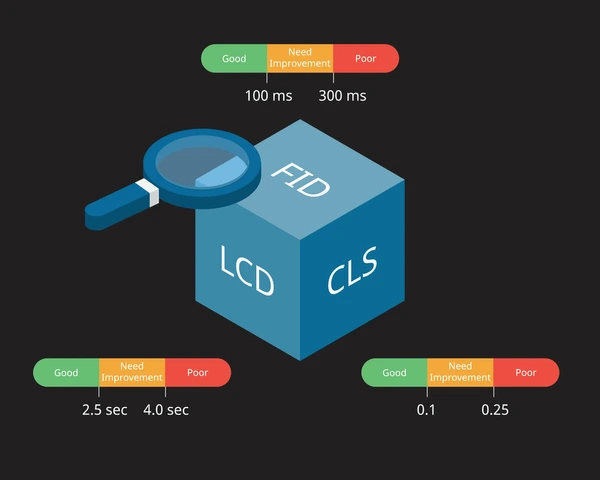
Core Web Vitals are user-centric metrics that Google uses to evaluate page speed and overall user experience. They include:
Large, uncompressed images are one of the most common causes of slow loading times. Google suggests using SVG or WebP images, because they improve web performance and accessibility format due to the low size of the variants. Proper sizing of the images in respect to the web page coding is also important as loading of the unsized images consumes a significant amount of data and ultimately results in slow loading of the website. Optimizing images can significantly speed up your site.
Heavy or poorly optimized code can increase page load times. Minifying and compressing JavaScript and CSS can lead to faster load times.
A slow server can severely impact page speed. Reducing the time to first byte (TTFB) is crucial for improving performance.
Too many third-party scripts, such as ads and social media plugins, can slow down your site. Auditing and removing unnecessary scripts can help.
Your hosting provider plays a significant role in page speed. If your hosting isn’t optimized for speed, it’s time to upgrade.
Several tools can help you analyze and improve your page speed:
These tools provide insights into what’s slowing your site down and offer actionable suggestions for improvement.
Compressing images without losing quality is one of the easiest ways to boost your page speed.
Minifying removes unnecessary characters like spaces and comments from your code, making your pages load faster.
Browser caching stores static files locally on the user’s device, reducing the load time when they revisit your site.
Choosing a reliable hosting provider and optimizing your server settings can significantly reduce response time.
CDNs distribute your content across various locations, ensuring that users access the nearest server for faster loading.
If you notice that your website takes more than 3 seconds to load or you see increasing bounce rates in your google analytics, it’s high time to consider a page speed optimization services.
If you’re planning a significant redesign or adding new features to your website, optimizing page speed should be a priority to ensure that the new elements don’t slow down your site.
Google updates its Core Web Vitals periodically. If your site doesn’t meet the core web vitals benchmarks, it’s crucial to re-optimize for better performance and rankings. You may check the benchmark value in your search console (previously web master) account.
Page speed optimization requires a deep understanding of web development and SEO. Hiring professionals ensures that all aspects are covered efficiently.
While you can attempt to optimize your site yourself, a professional service can save you time and money by avoiding costly mistakes.
A one-time optimization can help, but continuous monitoring and updates are essential to maintain fast loading speeds over time.
When hiring a page speed optimization services, consider asking the following questions:
Be cautious if a service promises immediate, drastic improvements without providing a clear strategy. Optimization is a process, and while improvements can be seen quickly, it requires ongoing maintenance. Also, avoid services that rely solely on automated tools without manual intervention or code expertise.
The financial impact of a slow website can be significant. E-commerce sites, in particular, risk losing potential customers and sales due to slow page speeds. Every extra second a page takes to load can cost businesses thousands of dollars in lost revenue.
A slow website doesn’t just affect new visitors—it can also harm relationships with returning customers. If users have a frustrating experience, they are less likely to come back. A Digital Marketing Agency can help optimize your page speed to ensure that your loyal customers remain satisfied and engaged with your brand.
Page speed is a crucial factor for both user experience and SEO. Slow websites frustrate users and ultimately hurt your rankings, while fast-loading pages enhance both. Investing in professional Page Speed Optimization Services can improve your website’s performance, leading to higher SEO rankings, better user experiences, and increased conversions. Whether you’re running a small local business or a large e-commerce store, optimizing your website’s speed is a must in today’s competitive online environment.

Saurabh Garg, the visionary Chief Technology Officer at Whitebunnie, is the driving force behind our cutting-edge innovations. With his profound expertise and relentless pursuit of excellence, he propels our company into the future, setting new standards in the digital realm.

A healthy website maintains steady search traffic and rankings. When organic traffic or keyword positions suddenly fall, it’s time to […]
Read Post »
If you manage a website, you’ve probably heard the terms Core Web Vitals and page speed optimization being tossed around. […]
Read Post »
Copyright © 2026 White Bunnie -All Rights Reserved