


How To Find & Fix Keyword Cannibalization
-
Author
Saurabh Garg -
Publish
December 23, 2025 11:24 am -
Read Time
7 Min
 Lets talk











Fill in the Form below for a no-string attached free technical discussion.
Keyword cannibalization is one of the most misunderstood SEO problems. Many websites suffer from it for years without realizing why rankings fluctuate, traffic stalls, or the “wrong” page keeps ranking on Google. This often happens when Contextual Keywords are not mapped properly across pages.
This issue becomes common as a website grows. New blogs get published. Old pages get updated. Location pages multiply. Over time, pages begin to overlap. When that overlap targets the same keyword and the same search intent, Google struggles to decide which page deserves priority. This guide explains keyword cannibalization from the ground up what it is, why it damages SEO performance, how to identify it with confidence, and how to fix it without risking traffic loss.
Keyword cannibalization occurs when multiple pages on the same website target the same search query with the same intent. As a result, those pages compete against each other in Google search results.
Instead of strengthening rankings, this internal competition weakens them. Google keeps alternating between pages, testing which one fits best, but never fully commits to a single URL. This confusion increases when Long-Tail Keywords are not differentiated properly across content types.
It is important to clarify what keyword cannibalization is not.
If two pages rank for the same keyword but serve different purposes, there is no cannibalization. For example, a blog explaining a concept and a service page selling that solution can rank for overlapping terms because their intent differs. Google understands that distinction.
Cannibalization only becomes a problem when:
The pages answer the same user question
The pages aim for the same outcome
The pages sit at the same stage of the buyer journey
When intent overlaps, Google has no clear signal about which page should win.
Keyword cannibalization weakens SEO performance in several ways, most of which compound over time rather than appearing as sudden drops.
Search engines prefer clarity. When one page fully represents a topic, Google can rank it with confidence. When that authority is split across multiple URLs, none of the pages become strong enough to dominate. Instead of one page ranking in the top three, two pages may hover between positions 8 and 20.
Cannibalized pages often swap positions week after week. One update pushes page A up. The next crawl pushes page B up. This instability leads to inconsistent traffic and poor click-through rates.
Google may rank a less relevant page over the page designed to convert. For example, an informational blog may outrank a service page, leading to traffic that does not convert into leads.
Internal links, topical relevance, engagement signals, and backlinks get divided across competing pages. This reduces the overall strength of each URL.
Google repeatedly crawls overlapping pages trying to determine relevance. This slows down the discovery of new or more valuable content.
Most keyword cannibalization issues are unintentional. They usually arise from growth, not poor SEO practices.
One common cause is publishing multiple blogs around the same keyword with only minor variations. This often happens when data from Keyword Research Tools is used without intent mapping. For example, “Best Accounting Software in India” and “Top Accounting Software for Indian Businesses” may end up covering the same content with the same intent.
Another frequent cause is location pages created with near-identical copy. City names change, but the services, headings, and structure remain the same. Google treats these pages as interchangeable.
Cannibalization also occurs when blogs overlap with service pages. Educational content gradually becomes sales-oriented, while service pages become content-heavy, blurring intent boundaries. On ecommerce websites, category pages, subcategory pages, and filtered URLs often target the same product terms, creating competition within the same site.
Identifying keyword cannibalization requires confirmation, not assumption. Ranking for the same keyword alone does not prove a problem. Intent overlap does.
Google Search Console is the most reliable tool for detecting cannibalization because it shows how Google already treats your pages. Begin by opening the Search Results report. Choose a keyword you suspect is problematic. Once filtered, open the Pages tab.
If you see multiple URLs receiving impressions and clicks for the same query, pause and investigate. Look for patterns where rankings or clicks shift between pages over time. That behavior signals internal competition.
Next, reverse the process. Select an important page, then review the queries it ranks for. Check whether those same queries also appear on another page. This method helps protect revenue-driven pages.
Once two pages appear for the same keyword, compare them manually.
If the answer is yes, you are dealing with true cannibalization.
A structured content inventory makes cannibalization visible at scale. Map each page to one primary keyword and one clear intent. When the same keyword-intent pair appears more than once, the conflict becomes obvious.
This step is especially important for large Indian websites with service pages, blogs, and city pages operating together under a unified Keyword Strategy.
Fixing cannibalization is not about deleting content blindly. The solution depends on page quality, intent, and business value.
Merging works best when two pages cover the same topic with similar depth and intent. Choose one page as the primary version. Consolidate the strongest sections from the weaker page into it. Improve structure, clarity, and coverage. Then permanently redirect the weaker page to the primary URL.
This approach concentrates authority, improves depth, and removes internal competition.
Sometimes both pages deserve to exist. In that case, the solution is not removal but repositioning. Shift one page toward a different angle. For example, turn one page into a practical checklist while the other remains a strategic guide. Adjust titles, introductions, headings, and examples so each page serves a distinct purpose.
Google ranks intent, not keywords alone. When intent differs, competition disappears.
Internal links help Google understand which page matters most. Link supporting pages to the primary page using clear, natural anchor text. Ensure navigation menus, footers, and related content sections reinforce the same priority URL.
This step alone can resolve mild cannibalization when content quality is strong.
Canonical tags tell Google which page should be treated as the main version. This approach works when pages cannot be merged due to operational or structural reasons. However, canonical tags are advisory, not guaranteed. They work best when combined with clean internal linking and clear intent separation.
When a page exists for internal use but offers no search value, noindexing removes it from competition entirely. This approach is common for campaign pages, internal filters, and low-value duplicates that should remain accessible to users but not to search engines.
Consider an Indian service website that publishes:
All three target similar keywords with comparable Keyword Difficulty. Over time, rankings fluctuate and leads remain flat.
The fix:
After consolidation, Google clearly understands which page educates and which page converts.
Prevention is simpler than repair. Every new page should be planned before it is written. Assign one primary keyword and one intent per page. If a similar page already exists, update it instead of creating a new one.
Location pages must be genuinely local. Each city page should include unique context, not recycled paragraphs.
Regular audits using Google Search Console help catch early overlap before it damages rankings.
Keyword cannibalization is easy to overlook but costly if ignored. By identifying overlapping pages, merging content where needed, and clarifying search intent, you improve rankings and keep your site’s SEO structure clean.
Fixing cannibalization doesn’t require technical overhauls. Most of the time, it’s about clarity, planning, and clean execution. A little effort goes a long way in building a strong content hierarchy.
If you’re managing SEO for a growing site and need expert help, White Bunnie specializes in search strategy and content optimization. Our team understands what makes Indian search traffic tick and we’re here to help you clean up cannibalization for good.

Saurabh Garg, the visionary Chief Technology Officer at Whitebunnie, is the driving force behind our cutting-edge innovations. With his profound expertise and relentless pursuit of excellence, he propels our company into the future, setting new standards in the digital realm.
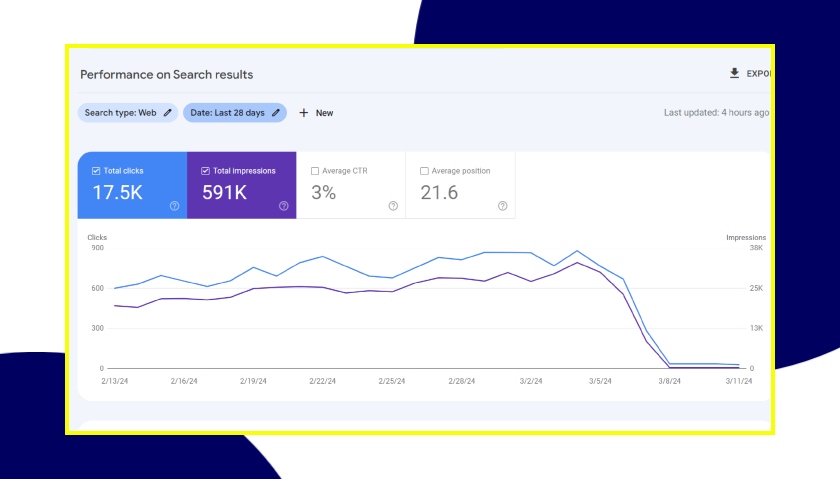
A sudden drop in your website’s organic traffic can feel like an emergency. One day, your analytics are steady; the […]
Read Post »
As with SEO, all keywords aren’t created equal. While marketers most often go after high-volume, short-tail keywords, the real wizardry […]
Read Post »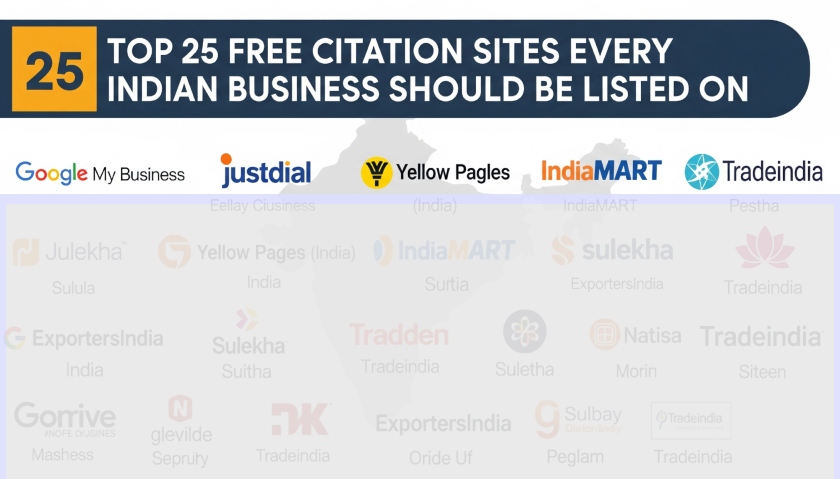
Are local customers struggling to find you? Picture this: you own a wonderful boutique in Kolkata, but your shop is […]
Read Post »
Copyright © 2026 White Bunnie -All Rights Reserved