


Ecommerce SEO: Ultimate Guide for 2025
-
Author
Saurabh Garg -
Publish
September 20, 2024 1:29 pm -
Read Time
12 Min

 Lets talk











Fill in the Form below for a no-string attached free technical discussion.
A strong SEO strategy is important for the success of an ecommerce website. Whether you’re just starting out and planning for your next side hustle or looking to refine your existing approach, this comprehensive guide will help you improve your website’s organic visibility, attract more customers, and boost your sales. For those aiming to stay ahead, exploring innovative ecommerce SEO guides can provide a competitive advantage.
Keep reading, We’ll walk through specific ecommerce SEO strategies that will make your projects successful. Follow along with these 17 elements to understand the basics of ecommerce SEO and master it.
Ecommerce SEO is the process of optimizing an online store website to improve its organic presence and better rankings in search engine results pages (SERPs). It involves various strategies and practices with the goal at generating more organic traffic, increasing brand awareness, and ultimately driving more sales for e-commerce businesses. In 2025, following a comprehensive ecommerce SEO guide is more important than ever for long-term growth.
Ecommerce SEO is important because it helps ecommerce stores reach potential customers who are actively searching for products they offer, providing an alternative to costly paid advertising and contributing to long-term, sustainable growth.

Keyword research and mapping with the right product is the foundation for any successful SEO campaign, especially for ecommerce sites. By identifying the terms and phrases your potential customers are using to search for products like yours, you can optimize your content to match their intent and appear in relevant search results.
Key aspects of keyword research for ecommerce include:
Use tools like Google Keyword Planner, Ahref, SEMrush or alike to identify high-value keywords for your products and categories. Integrating key ecommerce SEO guides into your keyword strategy will ensure you’re targeting the terms that matter most. Remember, the goal is not just to find high-volume keywords, but to target terms that are most likely to convert visitors into customers.
By consistently refining your keyword strategy and adapting to changing search trends, you’ll be better positioned to attract qualified traffic to your ecommerce site. Don’t forget to regularly review and update your keyword list to stay ahead of the competition and align with your customers’ evolving needs.
Pro Tip: If your Ecomemrce store is fairly new, focus on long-tail keywords specific to your products. Imagine you’re selling handmade leather wallets. Instead of targeting broad keywords like “wallets,” focus on specific, long-tail keywords such as “handcrafted leather bifold wallets for men” or “RFID-blocking slim leather wallets”.
On-page SEO is crucial for helping crawlers or say search engines understand your content and rank your pages appropriately. For ecommerce sites, this means optimizing both product and category pages to provide the best possible information to both search engines and potential customers.
Key elements of on-page SEO for ecommerce include:
Applying innovative ecommerce SEO guides can help you craft unique on-page content that stands out in search results. While it’s important to include relevant keywords, always prioritize valuable, informative content for users.
Pro Tip: Optimize product image for relevant alt text (e.g., “brown-leather-bifold-wallet-open.webp”)
Technical SEO ensures that search engines can easily crawl, understand, and index your pages, which is crucial for visibility in search results. Incorporating recommendations from an ecommerce SEO guide 2025 can help you address new technical challenges. Particularly for ecommerce sites with potentially thousands of product pages, getting technical SEO right is utmost important.
Key aspects of technical SEO for ecommerce include:
Start by conducting a thorough technical SEO audit of your site to identify areas for improvement. Use tools like Google Search Console (free) and Screaming Frog (Paid beyond 500 urls) to help you uncover and address technical issues.
A well-structured ecommerce site not only improves user experience but also helps search engines understand the relationship between different pages and products on your website. Good site architecture can lead to better crawling, indexing, and ultimately, improved search rankings.
Key elements of effective ecommerce site architecture include:
Modern ecommerce platforms now offer advanced navigation and filtering options to enhance both UX and SEO. When designing your site architecture, think from both a user and search engine perspective. Aim for a structure that’s intuitive for shoppers and easily crawlable by search engines.
Pro tip: Limit the number of clicks to reach any page up to 5.
Schema markup, a form of structured data, helps search engines better understand the content of your pages. For ecommerce sites, implementing schema can lead to rich snippets in search results, potentially increasing click-through rates and visibility.
Key types of schema markup for ecommerce include:
Rich results powered by schema markup can significantly improve your product visibility and click-through rates in 2025. Start by identifying the most important types of schema for your site. Use Google’s Structured Data Testing Tool to validate your markup and ensure it’s implemented correctly.
With mobile commerce on the rise, optimizing your ecommerce site for mobile users is no longer optional—it’s essential. Mobile SEO ensures that your site provides a great experience for mobile users and ranks well in mobile search results.
Key aspects of mobile SEO for ecommerce include:
Mobile-first indexing is now the default for Google, making mobile optimization a top priority for ecommerce brands. Start by using Google’s Mobile-Friendly Test to assess your current mobile performance. Then, focus on improving the mobile user experience across your site, paying particular attention to key pages like product listings and checkout processes.
Category pages act as a bridge between your homepage and individual product pages. Well-optimized category pages can rank for broader keywords, helping to capture users at earlier stages of the buying journey.
Key strategies for optimizing category pages include:
Adding unique FAQs to category pages can help target voice search queries and improve engagement. When creating content for category pages, aim to provide value beyond just listing products. Include helpful information about the product category, buying guides, or frequently asked questions to make these pages more informative and engaging.
Product pages are the heart of any ecommerce site. Optimizing these pages not only helps them rank better in search results but also increases the likelihood of converting visitors into customers. Effective product page SEO combines technical optimization with compelling content to create pages that appeal to both search engines and potential buyers.
Key elements of product page SEO include:
Including short product demo videos can significantly increase conversion rates and time-on-page. When optimizing your product pages, focus on providing comprehensive, accurate information about your products. Use your target keywords naturally within the content, but prioritize creating descriptions that truly inform and engage your potential customers.
Pro Tip: Google has specified product data specification for ideal practices
Link building still remains an important strategy of SEO, helping to establish your ecommerce site’s authority and credibility in the eyes of search engines. However, building quality links for an ecommerce site can be challenging, especially when dealing with a large number of product pages.
Effective link building strategies for ecommerce include:
Collaborating with micro-influencers can generate authentic backlinks and social proof for your ecommerce brand. Focus on acquiring high-quality, relevant links rather than pursuing a high quantity of low-quality links. Look for opportunities to earn links naturally by creating valuable content and engaging with your industry community.
Pro Tip: Focus on User Generated Content (UGC) to improve your store trust matrix across Google and Social Media channels.
Content helps attract and engage potential customers at various stages of the buying journey. By creating valuable, relevant content, you can improve your search visibility, establish your brand as an authority in your niche, and drive more qualified traffic to your product pages.
Key content strategies for ecommerce include:
Regularly updating evergreen content ensures your site remains relevant and continues to attract organic traffic. When developing your content strategy, focus on creating pieces that genuinely help your target audience. Use your keyword research to inform your content topics, but always prioritize quality and relevance over keyword density.
Expanding your ecommerce business to international markets can open up significant growth opportunities, but it also presents unique SEO challenges. International SEO ensures that your site is properly optimized for different countries and languages, helping you reach and engage global audiences effectively.
Key strategies for international ecommerce SEO include:
Automated translation tools have improved, but manual localization is still key for accuracy and cultural relevance.
Pro Tip: Consider working with native speakers and writers to ensure your content is properly localized and culturally appropriate.
Even if you’re primarily an online retailer, local SEO services can be a valuable tool for attracting nearby customers and competing with brick-and-mortar stores. Local SEO helps your business appear in location-based searches, which can be particularly valuable for ecommerce businesses with physical locations or those offering services like in-store pickup.
Key strategies for local SEO in ecommerce include:
Integrating local inventory data can help customers see product availability in nearby stores, enhancing the local shopping experience. Start by auditing your current local SEO presence and identifying areas for improvement. Use tools like Google My Business Insights to track your local search performance and gather valuable data about how customers are finding and interacting with your business online.
Pro Tip: 46% of the searches on Google have local intent
As voice-activated devices become more prevalent, optimizing for voice search is increasingly important for ecommerce businesses. Voice searches tend to be more conversational and often have different intent compared to typed searches, requiring a slightly different approach to SEO.
Key strategies for voice search optimization in ecommerce include:
Voice assistants are now being used for direct purchases, making transactional voice queries a new area of focus for ecommerce SEO. When optimizing for voice search, think about the natural language your customers might use when asking about your products. Use tools like Answer the Public to discover common questions related to your products or industry.
Voice search optimization is still an evolving field. Stay informed about the latest trends and best practices, and be prepared to adapt your strategy as voice search technology continues to develop.
While SEO focuses on driving traffic to your site, Conversion Rate Optimization (CRO) is about turning that traffic into customers. By aligning your SEO and CRO efforts, you can not only improve your search rankings but also increase the likelihood that visitors will make a purchase.
Key strategies for combining CRO and SEO include:
Personalized product recommendations based on user behavior can boost both conversions and average order value. Start by identifying pages with high traffic but low conversion rates. Use tools like Google Analytics to track user behavior and identify potential obstacles in the conversion process.
Good UX is about more than just technical optimization—it’s about creating an enjoyable, frictionless shopping experience for your customers. Search engines like Google increasingly prioritize sites that provide a great user experience, making UX optimization a crucial part of any comprehensive SEO strategy.
Key aspects of UX optimization for ecommerce SEO include:
Heatmap analysis tools can help you visualize user interactions and uncover UX issues that may not be obvious from analytics alone. Begin by conducting a UX audit of your site, paying particular attention to key pages like product listings and checkout processes.
Pro Tip: Regularly gather user feedback and analyze user behavior to continually improve your site’s UX.
The right tools can significantly streamline your ecommerce SEO efforts, helping you identify opportunities, track performance, and make data-driven decisions. Cloud-based SEO platforms are now enabling real-time collaboration and reporting for ecommerce teams. While there are many SEO tools available, it’s important to choose ones that align with your specific needs and budget.
Some essential tools for ecommerce SEO include:
Start by identifying your key SEO challenges and priorities, then research tools that address these specific needs. Remember, tools are meant to support your SEO efforts, not replace strategic thinking.
Pro Tip: Many tools offer free trials, so take advantage of these to test different options before committing.
By setting up proper tracking, you can gain valuable insights into your site’s performance, user behavior, and the ROI of your SEO initiatives. Begin by ensuring that Google Analytics and Google Search Console are properly set up on your site.
Key aspects of analytics and tracking for ecommerce SEO include:
Joining ecommerce SEO webinars can provide actionable insights and direct access to industry experts. Regularly analyze your data to derive actionable insights, and use these insights to inform your ongoing SEO strategy. By making data-driven decisions, you can continually improve your ecommerce site’s SEO performance.
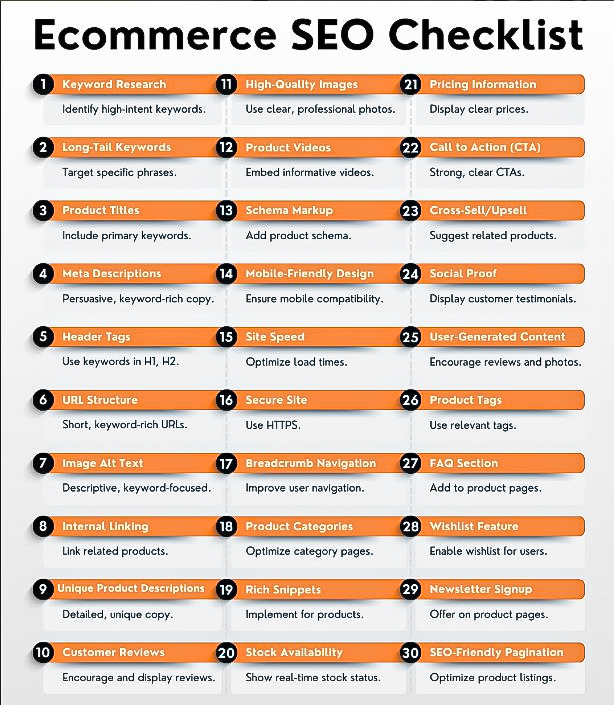
Many platforms (e.g. shopify, wix, magento, big commerce, etc.) offer built-in SEO features, but there are additional optimizations you can implement to improve your store’s search performance.
Key SEO considerations while choosing the platform for your next store are:
It’s important that your chosen platform supports general ecommerce SEO best practices.
The world of SEO is constantly evolving, and has taken a full swing since the public inception of the AI Trends. While it’s important to master current best practices, it’s equally important to prepare for the future of ecommerce SEO.
Some key trends to watch in ecommerce SEO, 2025 include:
Start by staying informed about these trends through industry blogs, webinars, and conferences. Consider how these trends might impact your specific niche and start experimenting with new technologies and strategies on a small scale.
Mastering SEO for your ecommerce site is an ongoing journey that requires dedication, continuous learning, and adaptation. While it’s important to be aware of future trends, don’t neglect the fundamentals of SEO. Focus on creating high-quality content, providing excellent user experience, making data driven decisions, and building a technically sound website. These core principles will continue to be valuable regardless of how search algorithms evolve.
Remember, the most successful ecommerce brands treat SEO as an ongoing process, not a one-time task. To stay ahead of the competition and ensure long-term growth, it’s essential to partner with the right Ecommerce SEO Agency. Whether you’re a small business or an established brand, choosing the best SEO Company for e-commerce can make all the difference in improving your site’s visibility and driving qualified traffic. For businesses looking to optimize their online store, investing in Ecommerce SEO Services in India can help you achieve sustainable success by targeting the right customers and boosting sales.

Saurabh Garg, the visionary Chief Technology Officer at Whitebunnie, is the driving force behind our cutting-edge innovations. With his profound expertise and relentless pursuit of excellence, he propels our company into the future, setting new standards in the digital realm.

In 2025, SEO content writing demands precision, intent, and a touch of creativity. The goal isn’t just to satisfy search […]
Read Post »
Google Web Stories SEO: Web Stories are web-based adaptations of the popular ‘Stories’ forms that you may have seen on social […]
Read Post »
Tracking your marketing campaigns effectively is crucial to understanding what works and where to invest your efforts. Google Analytics 4 […]
Read Post »
Copyright © 2026 White Bunnie -All Rights Reserved