

Why Your SaaS Blog Gets Traffic But Zero Demos
-
Author
Saurabh Garg -
Publish
May 27, 2026 10:39 am -
Read Time
8 Min

 Lets talk











Fill in the Form below for a no-string attached free technical discussion.
You check Google Search Console on a Monday morning. The numbers look decent – 8,000 sessions last month, average position 14, a handful of posts ranking on page one. But your demo calendar? Empty. Your trial signups? Flat.
This isn’t an unusual situation. It’s actually one of the most common disconnects in SaaS marketing, and it quietly kills content budgets every quarter.
The problem isn’t that your blog doesn’t work. It’s that it’s doing a completely different job than you think it is.
Here’s a blunt truth: Most SaaS blogs are built to attract readers, not buyers.
The posts rank. People arrive. They read for two minutes, maybe bookmark the article, and leave. No trial. No demo. No conversion.
This happens because the content was optimised for search volume, not purchase intent. There’s a big difference between someone searching “what is a CRM” and someone searching “best CRM for D2C brands in India.” The first person is curious. The second is evaluating options.
Most SaaS blogs chase the first group because the search volumes are bigger. But the second group is the one worth talking to.
Intent mismatch is the root cause. Fix this, and blog conversions follow naturally.
There’s also a visibility layer worth thinking about. Google’s AI Overviews and AI Mode now intercept a growing share of informational queries before users even reach your blog. According to what changed in Google’s AI search, 93% of AI Mode sessions end without a click to an external site. If your content only attracts top-of-funnel readers, you’re losing them twice once to AI search, and again to low intent.
High-volume, low-intent keywords inflate your traffic metrics without bringing in anyone close to a buying decision.
Think about a project management SaaS targeting the keyword “team collaboration tips.” That post might pull 3,000 visitors a month. But most of those visitors are students, HR managers doing research, or people killing time at work. Almost none are evaluating project management software.
Compare that to a post targeting “Asana vs Monday for remote software teams”, lower volume, but every reader is actively comparing products in your category.
Signs you’re targeting the wrong keywords:
The fix: Build a content map that separates awareness-stage content from decision-stage content, and make sure you’re actively producing both. Most SaaS blogs are 90% awareness, 10% decision. Flip the ratio for at least a portion of your output.
Walk through your top five blog posts right now. What does the call-to-action at the bottom say?
If it’s “Start your free trial” or “Book a demo” sitting in a generic banner that looks the same on every article, that’s the problem.
Generic CTAs are easy to ignore because they’re not contextually relevant. A reader who just finished your article on “how to reduce customer churn” isn’t ready to jump into a demo based on a cold invitation. But they might respond to something more specific: “See how [Product] tracks churn signals in real time, 15-minute walkthrough, no prep needed.”
The difference is specificity. Specific CTAs feel like the next natural step, not a sales push.
Practical improvements:
Most SaaS content strategies focus heavily on top-of-funnel education. That’s not wrong; it builds brand awareness and earns organic traffic. But without decision-stage content, you’re creating a pipeline that fills at the top and leaks at the bottom.
Decision-stage content includes:
These posts rank for long-tail keywords with high commercial intent. They may drive a fraction of the traffic your educational posts get, but conversion rates are typically 5–10x higher.
A well-structured content funnel doesn’t abandon top-of-funnel content. It adds the missing middle and bottom layers. Understanding topical authority helps you map this funnel properly covering the full topic cluster, not just the high-volume edges of it.
Most blog visitors don’t convert on the first visit. Research on B2B buying cycles suggests the average SaaS purchase involves multiple touchpoints over weeks or months, sometimes longer for mid-market deals.
If someone reads your post and leaves without any way for you to re-engage them, that visit is essentially lost.
This doesn’t mean aggressively pop-up-ing every reader. But it does mean having lightweight, genuinely useful lead magnets positioned within relevant articles.
High-performing mid-funnel offers for SaaS blogs:
The goal is to earn a second touchpoint, not force an immediate demo. From there, a well-designed nurture sequence does the work.
To make this concrete: here’s the difference between a blog optimised for traffic and one optimised for pipeline.
| Factor | Traffic-Optimised Blog | Pipeline-Optimised Blog |
| Keyword focus | High volume, broad topics | Intent-matched, includes commercial terms |
| Content mix | 90% educational | Balanced across funnel stages |
| CTA strategy | Generic, static banners | Contextual, topic-matched CTAs |
| Lead capture | Email subscribe widget | Topic-relevant lead magnets |
| Conversion tracking | Pageviews, sessions | Demo requests, trial signups by content source |
| Content types | How-to guides, listicles | Use cases, comparisons and ROI content |
None of this requires scrapping what you’ve built. It’s an additive process: audit what you have, identify the gaps, and systematically fill them.
There’s also a growing dimension that SaaS marketers can’t afford to ignore: AI search visibility. As B2B brands get fewer AI search citations, the content that earns citations in Google AI Mode, ChatGPT, and Perplexity tends to be the same content that converts — specific, experience-backed, and structured around real problems. Building for pipeline and building for AI visibility are now the same goal.
If you want to diagnose your own blog before making changes, run through this:
This audit takes a few hours but usually surfaces two or three high-impact fixes that can be implemented within a week. A proper SEO audit goes even deeper, mapping technical gaps alongside content ones so nothing slips through.
The SaaS companies that get a consistent demo pipeline from their blogs don’t necessarily publish more. They publish smarter with a deliberate mix of content that serves readers at every stage of their decision-making process.
At White Bunnie, we’ve seen this pattern repeatedly across clients: the shift from traffic-first to intent-first content marketing strategy is one of the highest-leverage moves a SaaS marketing team can make. It doesn’t require a bigger budget. It requires a clearer map.
Start by adding one decision-stage post per month. Then improve CTAs on your five highest-traffic posts. Then build one lead magnet for your most-read topic cluster.
Small, focused changes compound quickly.
Why does my SaaS blog get traffic but no signups?
The most common reason is intent mismatch. Your posts are attracting people who are curious or researching, not people who are actively evaluating a product like yours. A second common issue is weak or generic calls-to-action that don’t give readers a clear, relevant next step. Auditing your keyword mix and CTA relevance usually surfaces the problem quickly.
What types of blog content convert best for SaaS?
Decision-stage content converts at the highest rates: product comparison posts, use-case articles, ROI breakdowns, and customer-led narratives. These attract readers with higher purchase intent, even if the search volumes are lower. Educational content builds awareness but needs to be paired with bottom-of-funnel content to drive demo requests.
How long does it take for a SaaS blog to generate demo leads?
Realistically, expect 3–6 months before content changes show consistent pipeline impact, because SEO rankings take time to shift. However, CTA and lead magnet improvements on existing high-traffic posts can show results within weeks, since the traffic is already there.
Should I gate my best SaaS blog content?
Generally, no gating educational content reduces organic reach and SEO value. The better approach is to keep articles fully accessible and gate supplementary resources (templates, calculators, deeper data) that naturally follow from the article. This captures interested readers without blocking the content that earns your search rankings.
Blog traffic that doesn’t convert isn’t a content quality problem. It’s a strategy alignment problem. You’re attracting the right volume of people, but not the right people at the right moment or you’re reaching them and then letting them leave without a reason to stay in touch.
Fix the intent, fix the CTAs and add the missing funnel layers. That’s the full picture.

Saurabh Garg, the visionary Chief Technology Officer at Whitebunnie, is the driving force behind our cutting-edge innovations. With his profound expertise and relentless pursuit of excellence, he propels our company into the future, setting new standards in the digital realm.
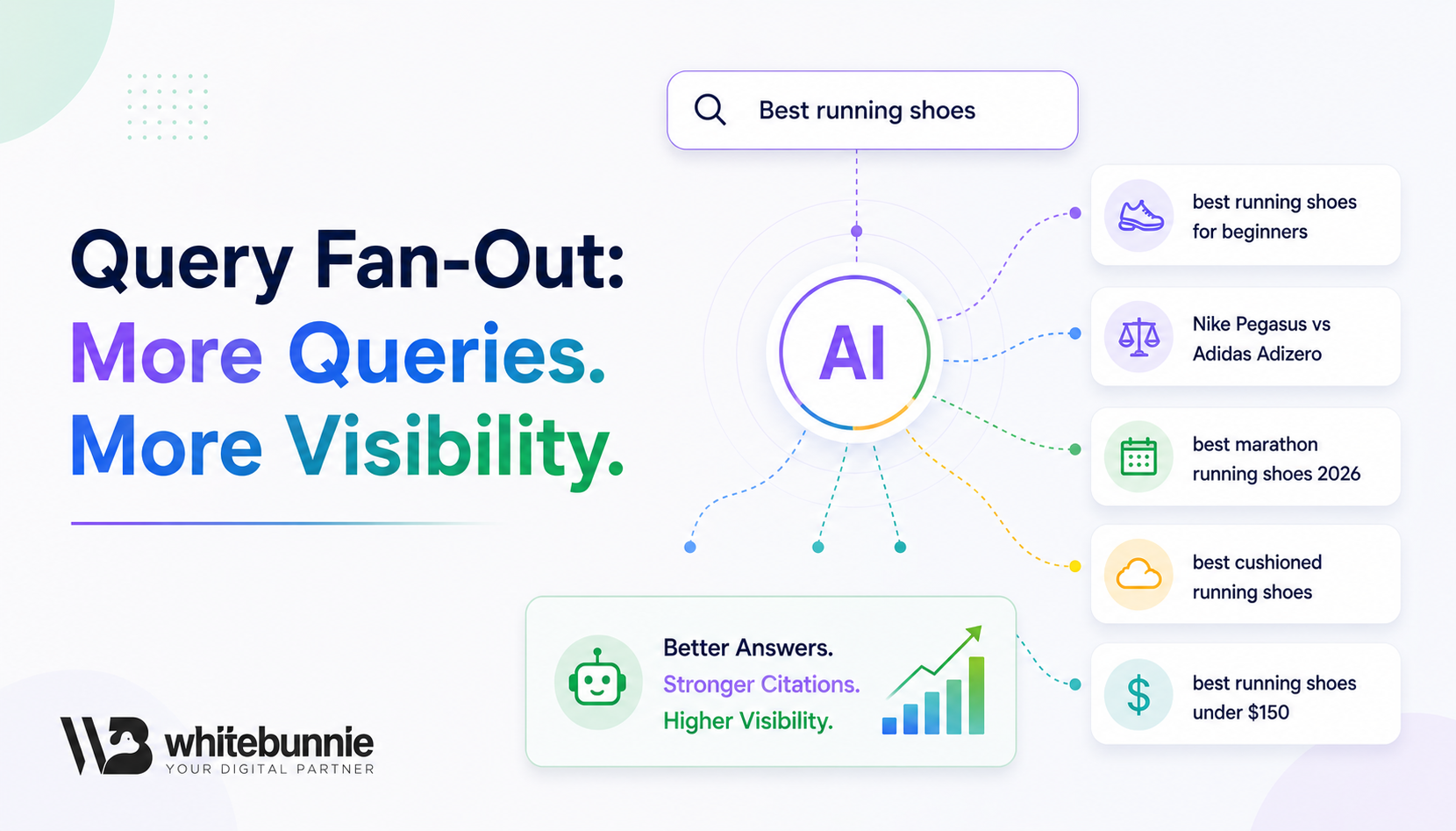
TL;DR: Query fan-out is the process by which an AI search engine turns one question into many smaller searches. It […]
Read Post »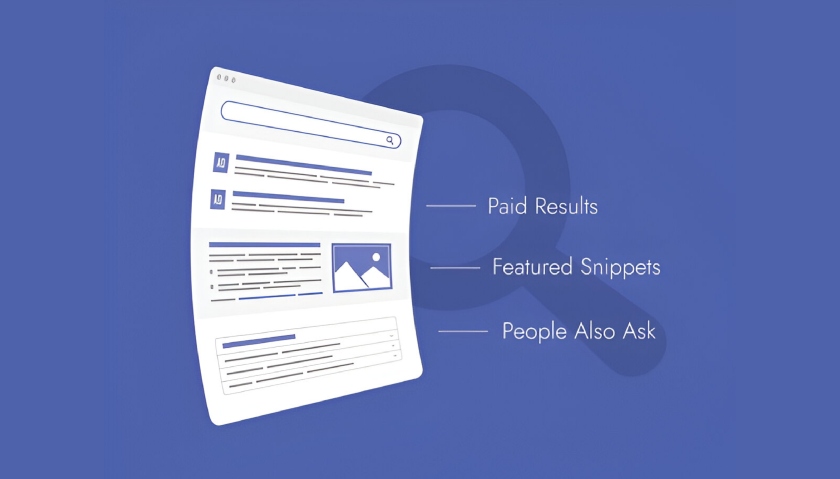
Imagine you completed a blog. You published it. Now, you check it and finally, it’s ranking on the page #1 […]
Read Post »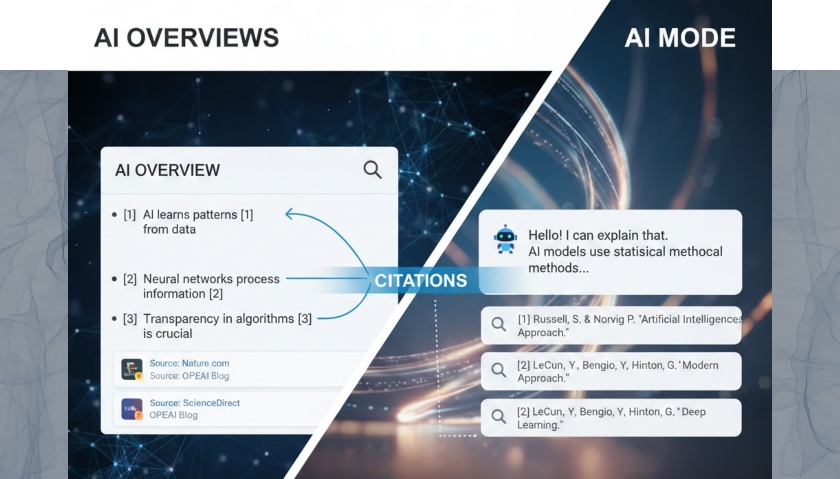
Google Search no longer shows information in a single, uniform way. Over the last two years, Google has introduced multiple […]
Read Post »
Copyright © 2026 White Bunnie -All Rights Reserved